
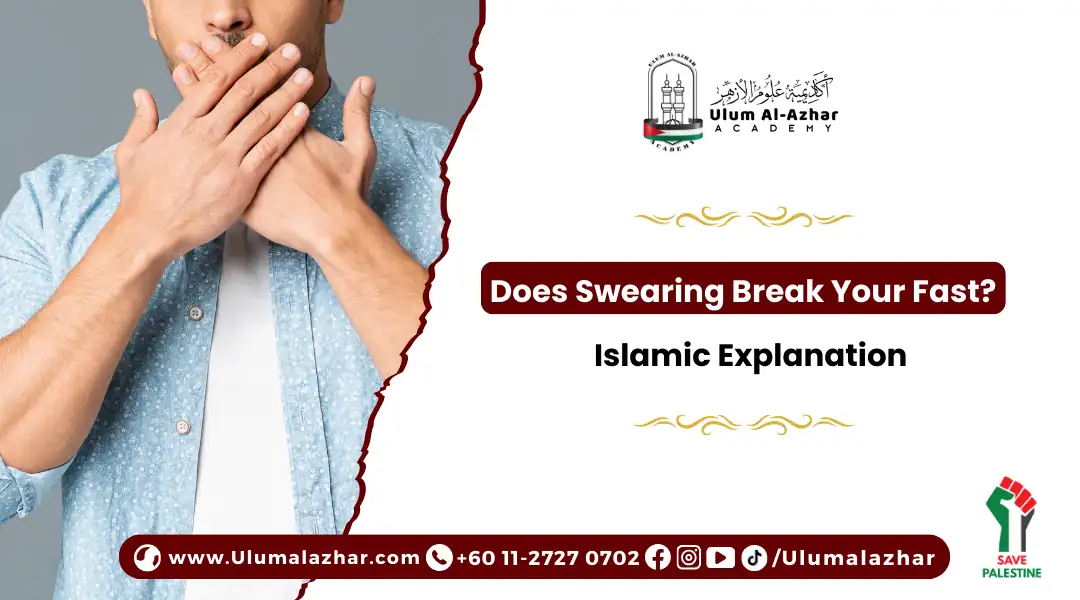
Does Swearing Break Your Fast? Islamic Explanation
Table of Contents
Before we answer the question does swearing break your fast? we should know that Allah, Glorified and Exalted be He, has made the month of Ramadan a field of competition for His servants, in which they race toward obedience to Him, in fulfillment of His saying: “So race to [all that is] good” (Al-Baqarah: 148).
Some people advance and attain success, while others fall behind and suffer loss. Allah, Exalted is He, has also informed us of three different states of His servants in their reception of His commands and law. He says:
“Then We caused to inherit the Book those We have chosen of Our servants; and among them is one who wrongs himself, and among them is one who is moderate, and among them is one who is foremost in good deeds by the permission of Allah” (Fatir: 32).
Thus, people fall into three categories in their response to the divine law: one who falls short in fulfilling the rights of his Creator; another who adheres to the outward form of worship without grasping its true essence; and a third who understands its reality and wisdom and acts upon it.
The attitudes of people toward fasting in the month of Ramadan also correspond to what has been previously stated. Some people engage in actions that diminish the reward of their fasting. Some wonder whether swearing is among these actions.
One of the most frequently asked questions during Ramadan is: does swearing break your fast? To know the answer, we must explore Islamic teachings on fasting, the purpose behind it, and the difference between actions that invalidate the fast and actions that diminish its reward.
Does Swearing Break Your Fast in Islam
Guarding the tongue from idle talk and from speech that brings no benefit is one of the most important objectives of Islamic law. This principle applies at all times, but it is even more strongly emphasized during the daytime of fasting. For this reason, jurists have stated that it is recommended for a fasting person to carefully protect their tongue. Accordingly, many new Muslims in Canada and other Western countries often ask, does swearing break your fast?
Swearing during the daytime of Ramadan, it does not invalidate the fast, but it diminishes its reward. A Muslim must control himself and guard his tongue from insults, abuse, backbiting, gossip, and similar acts that Allah has forbidden during fasting and otherwise—especially during fasting, when preserving its perfection is more emphasized. One should also avoid harming others or causing discord, hatred, and division, as the Prophet ﷺ said:
“If one of you is fasting, let him not engage in obscene speech or shouting. If someone insults him or tries to fight him, let him say: I am a fasting person.”
So, while the answer to does swearing break your fast is “no” in terms of legal validity.
Access a free consultation with Al-Azhar-certified Sheikhs from Egypt to begin your personalized Islamic education.
Difference Between Invalid Fast and Reduced Reward
To fully grasp the ruling behind “does swearing break your fast”, it is essential to understand the difference between an invalid fast and a fast with reduced reward.
1. Invalid Fast
An invalid fast occurs when a person commits one of the recognized physical nullifiers of fasting during daylight hours of Ramadan. These include:
- Sexual intercourse.
- Masturbation.
- Eating and drinking.
- Anything that takes the ruling of eating and drinking, such as nourishing injections and intravenous fluids.
- Drawing out blood through cupping (ḥijāmah) and similar procedures.
- Deliberate vomiting.
- The onset of menstrual or postnatal bleeding in a woman.
These are the nullifiers of fasting. If any of them occur, the Muslim’s fast becomes invalid; however, they must refrain from eating and drinking for the rest of the day and are required to make up that day later.
The exception is menstruation and postnatal bleeding: in this case, a woman does not need to continue abstaining for the remainder of the day; rather, she breaks her fast, and only making up the missed days is required.
Some of these nullifiers also require expiation in addition to making up the fast, such as engaging in sexual intercourse during the daytime of Ramadan.
2. Reduced Reward
The meaning of fasting is not only to abstain from food and drink, but also to discipline and purify the soul. Some actions do not invalidate the fast, but they do reduce its reward, and they are also prohibited outside the time of fasting. For example: watching forbidden content, using obscene or foul speech, gossip, and backbiting.
As for does swearing break your fast, the answer is that it reduces the reward of the fast because insults are among the harmful actions of the tongue that are prohibited in Islamic law, they are considered a sin, and a Muslim incurs blame and sin for them if he does not repent.
How Bad Speech Affects the Spirit of Fasting
The Prophet ﷺ said:
“Whoever does not give up false speech, acting upon it, and ignorant behavior, then Allah has no need for him to give up his food and drink.”
(Narrated by Sahih al-Bukhari)
This hadith does not mean that a person who commits sinful acts is required to break their fast. Rather, it highlights the seriousness of these sins and explains how they greatly diminish the reward of fasting.
Every act of disobedience affects the fast, because Allah the Exalted prescribed fasting for us in order to attain taqwā (God-consciousness). He says:
“O you who believe, fasting has been prescribed for you as it was prescribed for those before you, so that you may become mindful of Allah.” (Al-Baqarah: 183)
One of the most important wisdoms behind fasting is that it trains a person to abstain from their basic desires, so that they can gain control over all their actions, including avoiding bad and harmful speech.
However, a Muslim must restrain themselves from everything that angers Allah, in accordance with Abu Hurairah رضي الله عنه reported that the Messenger of Allah ﷺ said:
“Fasting is not merely abstaining from food and drink; rather, fasting is abstaining from idle talk and obscene speech. If someone insults you or behaves ignorantly toward you, then say: ‘I am fasting, I am fasting.’”
Seerah of Prophet Muhammad: Get to know our role model: Prophet Muhammad by studying his life, character, attributes, and teaching style.

Controlling the Tongue During Ramadan
Imam Al-Ghazali advised that people in Ramadan fasting fall into three levels: the fasting of the common people, the fasting of the select, and the fasting of the select of the select.
The first level—the fasting of the common people—is merely restraining the stomach and private parts from fulfilling desire, with nothing beyond that. The Prophet ﷺ informed us about this category when he said:
“Perhaps a fasting person gains nothing from his fast except hunger and thirst.”
As for the fasting of the select, it is restraining the limbs from sins: lowering the gaze from what Allah has forbidden, protecting the tongue from lying, backbiting, and gossip, preventing the ears from listening to what is unlawful, and keeping the rest of the limbs away from acts of disobedience. This category is described by the saying of the Prophet ﷺ:
“When one of you is fasting, let him not engage in obscene speech or raise his voice in anger. If someone insults him or tries to fight him, let him say: I am fasting.”
One of the defining qualities of this group is that their hearts remain suspended between fear and hope, mindful of the saying of Allah the Exalted:
“And those who give what they give while their hearts are fearful because they will return to their Lord” (Al-Mu’minun: 60).
They do not know whether their fasting will be accepted—placing them among those brought near—or rejected—placing them among those kept distant and deprived.
As for the fasting of the select of the select, it is the fasting of the heart from base actions and worldly thoughts, and restraining it completely from everything other than Allah, Glorified and Exalted be He. Al-Ghazali described the person of this rank as one who turns with their entire aspiration toward Allah, turning away from all else, embodying the divine statement:
“Say: Allah—then leave them to plunge into their idle play” (Al-An‘am: 91).
This is the rank of the prophets, the truthful, and those drawn near from among Allah’s sincere and chosen servants.
If we revisit the question does swearing break your fast, we see that the real concern of fasting is self-mastery. Ramadan teaches believers to:
- pause before speaking,
- reflect before reacting,
- and choose silence over harmful words.
Practical Advice to Avoid Sin While Fasting
Because the tongue was created for speech, nothing protects it from slipping more effectively than occupying it with beneficial words—upright speech and kind speech—such as remembrance (dhikr), the Qur’an, glorification (tasbīḥ), and good words toward people.
This includes praising others with moderation, supplicating for them, mentioning their good qualities, bringing comfort to their hearts, and offering experience, advice, counsel, and sincere guidance, and similar virtuous meanings. All of this brings benefit and goodness to the individual, and fosters connection and cohesion within society.
Allah the Exalted says: “And speak kindly to people.” (Al-Baqarah: 83) —
Below are practical steps to help protect the fast from spiritual loss:
- Increase Awareness
Before speaking, pause and ask: “Is this pleasing to Allah?” Awareness is the first step toward change.
- Replace Bad Speech with Dhikr
Instead of swearing, train the tongue to say:
- SubḥānAllāh
- Alḥamdulillāh
- Allāhu Akbar
- Astaghfirullāh
This replacement transforms moments of anger into opportunities for reward.
3. Remember the Purpose of Fasting
When the question does swearing break your fast arises in your mind, remind yourself that fasting is about drawing closer to Allah, not just surviving hunger.
Learn Shariah through the method of Talaqqi Kitab Turath (Traditional Study) and get certificates endorsed by scholars from AL Azhar (Ijazah Sanad).
Conclusion
So, does swearing break your fast? no—it does not invalidate the fast. However, it is incumbent upon the fasting person to safeguard their fast, to be mindful of Allah in their tongue and in all their limbs, and to strive with utmost care not to let their share of fasting be nothing more than hunger and thirst.
The fasting person must avoid all prohibited matters, whether in speech or in actions. They should not backbite people, lie, or spread gossip among them, nor engage in unlawful transactions. Rather, they should stay away from all forbidden acts. If a person commits to this for an entire month, their soul will remain upright for the rest of the year.
Embark on your custom Islamic learning path through a free consultation session led by Egyptian Al-Azhar Sheikhs.
FAQs
Does swearing break your fast or just reduce its reward?
Swearing does not break the fast legally, but it reduces the reward.
Does swearing break your fast if done unintentionally?
Unintentional slips are forgiven, but repeated careless speech still diminishes spiritual benefit.
How can I protect my fast from bad speech?
By increasing remembrance of Allah, avoiding conflict, controlling anger, and remembering why you are fasting.
