
Islamic Hajj Date: When It Starts and Key Details Guide
Table of Contents
When Is the Islamic Hajj Date This Year
Hajj is the fifth pillar of Islam. Allah Almighty has made it obligatory once in a lifetime for every Muslim man and woman who is physically and financially able. This includes having the necessary provisions and means of travel, and for a woman, traveling with a mahram or a trustworthy group for safety. The islamic hajj date falls during the month of Dhul Hijjah, the twelfth and final month of the Islamic lunar calendar. Hajj rituals officially begin on the 8th of Dhul Hijjah and continue until the 13th of Dhul Hijjah. Because the Islamic calendar is lunar, the exact Gregorian dates vary every year. Islamic months begin with the sighting of the new moon, so official announcements are usually confirmed by religious authorities in Saudi Arabia shortly before the beginning of Dhul Hijjah.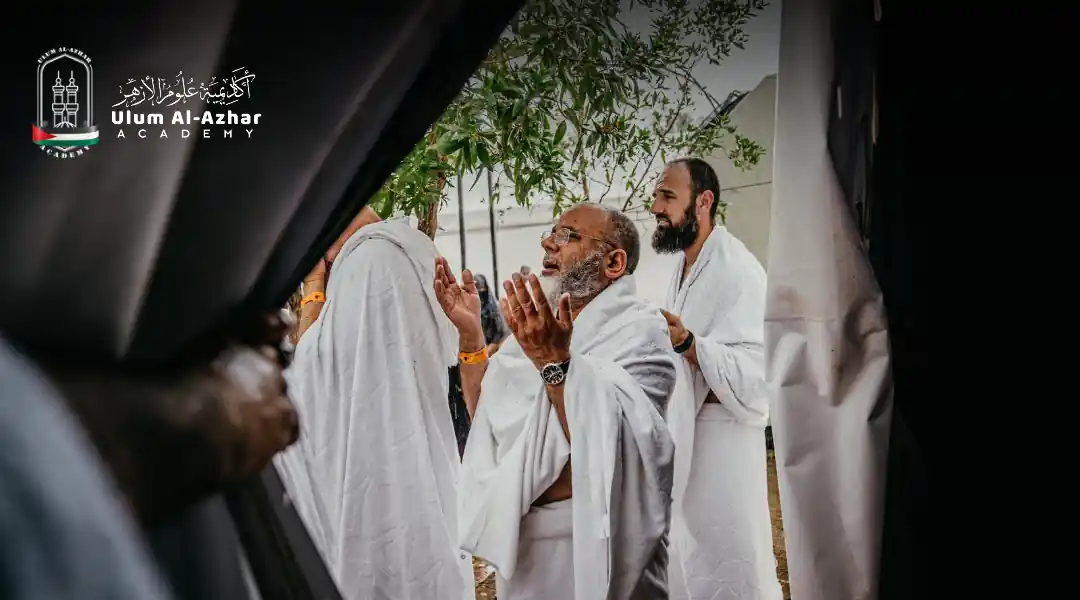
How Hajj Dates Are Determined
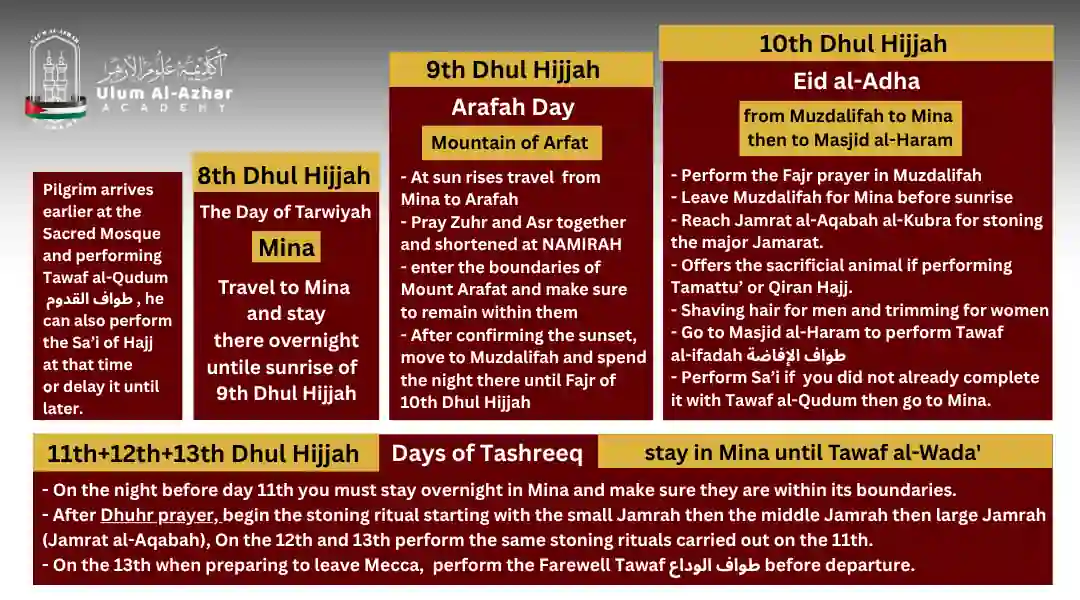
The islamic hajj date is determined according to the Islamic lunar calendar, also known as the Hijri calendar. Unlike the Gregorian calendar, which is based on the solar cycle, the Islamic calendar depends on the movement of the moon. A Muslim who wishes to perform the rituals of Hajj may choose between three types of pilgrimage: First: Ifrad Hajj الحج مفردًا This is when the pilgrim performs Hajj alone without combining it with Umrah, either before or after it. If a Muslim is performing Ifrad Hajj, they say at the Miqat: “Labbayka Allahumma Hajjan” (Here I am, O Allah, intending Hajj). They then enter directly into the rites of Hajj on the Day of Tarwiyah, the 8th of Dhul Hijjah. If the pilgrim arrives earlier at the Sacred Mosque, there is no harm in performing Tawaf al-Qudum طواف القدوم (the arrival circumambulation). They may also perform the Sa’i of Hajj at that time or delay it until later. A pilgrim performing Ifrad Hajj is not required to offer a sacrificial animal (Hady). Second: Tamattu’ Hajj الحج مُتَمَتِعًا This is when the Muslim enters into Ihram for Umrah only from the designated Miqat during the months of Hajj (Shawwal, Dhul Qa’dah, and the first ten days of Dhul Hijjah). After completing Umrah, the pilgrim remains in Mecca until the 8th of Dhul Hijjah (the Day of Tarwiyah), then enters Ihram again for Hajj from their place in Mecca. A pilgrim performing Tamattu’ Hajj enters into Ihram for Umrah from the Miqat, saying: “Labbayka Allahumma Umrah” (Here I am, O Allah, intending Umrah). Upon reaching the Kaaba, the pilgrim stops reciting the Talbiyah, enters Masjid al-Haram, and performs Tawaf around the Kaaba for seven circuits while uncovering the right shoulder. Afterward, they pray two rak‘ahs behind Maqam Ibrahim or anywhere convenient within the Sacred Mosque. The pilgrim then performs Sa’i between Safa and Marwah for seven rounds, beginning at Safa and ending at Marwah. Traveling from Safa to Marwah counts as one round, while returning from Marwah to Safa counts as the second round. After completing the seventh round at Marwah, the man shaves his head completely or trims all of his hair. As for the woman, she gathers her hair and cuts a small portion equal to the length of a fingertip. With this, the rituals of Umrah are completed, and the pilgrim exits the state of Ihram until the Day of Tarwiyah arrives. On that day, they enter into Ihram again for Hajj from their place in Mecca. A pilgrim performing Tamattu’ Hajj is required to offer a sacrificial animal, such as a sheep. Third: Qiran Hajj الحج قارنًا This is when the Muslim enters into Ihram for both Umrah and Hajj together from the Miqat. When entering Ihram at the Miqat, saying: “Labbayka Allahumma Umratan wa Hajjan” (Here I am, O Allah, intending Umrah and Hajj). The pilgrim continues reciting the Talbiyah until reaching the Kaaba, where they perform seven circuits of Tawaf while uncovering the right shoulder. This Tawaf is known as Tawaf al-Qudum (the arrival circumambulation). After that, they pray two rak‘ahs behind Maqam Ibrahim. If the pilgrim performs Sa’i at that time, it counts for both Umrah and Hajj. However, delaying the Sa’i until after stoning Jamrat al-Aqabah is also permissible. The pilgrim remains in the state of Ihram and later leaves the Sacred Mosque area to continue the rituals of Hajj when the Day of Tarwiyah arrives on the 8th of Dhul Hijjah. A pilgrim performing Qiran Hajj must also offer a sacrificial animal (Hady), just like the pilgrim performing Tamattu’. When the Day of Tarwiyah begins, the pilgrim proceeds with the upcoming rituals of Hajj explained in the following steps.Key Days of Hajj Explained and Timeline of Hajj Rituals
Understanding the important days connected to the islamic hajj date helps Muslims appreciate the spiritual meaning behind each ritual. The timing of entering Ihram and making the intention for Hajj has already been explained according to the type of Hajj being performed, whether Ifrad, Tamattu’, or Qiran. After that, the steps of Hajj proceed as follows:8th of Dhul Hijjah – The Day of Tarwiyah In Mina
During the morning hours (At Duha), the pilgrim travels to Mina and stays there overnight. While in Mina, the pilgrim performs the Dhuhr, Asr, Maghrib, Isha, and Fajr prayers at their proper times. The four-unit prayers are shortened to two rak‘ahs, while the Maghrib prayer remains three rak‘ahs as usual. Pilgrims are encouraged to frequently recite the Talbiyah, seek forgiveness, and make sincere supplications for themselves, their families, all Muslims, and their leaders. They should also be careful to maintain the authentic remembrances and supplications reported from Prophet Muhammad ﷺ during different times and situations.
9th of Dhul Hijjah – The Day of Arafah (then Muzdalifah)
The most important day connected to the islamic hajj date is the 9th of Dhul Hijjah, known as the Day of Arafah. When the sun rises on the Day of Arafah, the pilgrim travels from Mina to Arafah. The pilgrim remains in Namirah until the time of Dhuhr prayer, then performs Dhuhr and Asr together and shortened, preferably in congregation with the imam if possible. After that, the pilgrim enters the boundaries of Mount Arafat and makes sure to remain within them. The pilgrim should increase in remembrance of Allah, supplication, Talbiyah, and the declaration: “ لا إله إلا الله وحده لا شريك له، له الملك وله الحمد وهو على كل شيء قدير” (There is no god but Allah alone, without partner. To Him belongs all dominion and praise, and He is over all things capable.) The pilgrim should also send abundant prayers upon Prophet Muhammad. After confirming the sunset, the pilgrim proceeds to Muzdalifah, where Maghrib and Isha are prayed together and shortened. Maghrib is prayed as three rak‘ahs, while Isha is prayed as two rak‘ahs. No voluntary prayers are performed afterward except Witr. The pilgrim spends the night in Muzdalifah until Fajr. However, those with valid excuses, such as the sick, the elderly, the weak, and those accompanying them, are permitted to leave Muzdalifah for Mina after midnight.10th of Dhul Hijjah – Eid al-Adha (leaving Muzdalifah for Mina For stoning the major Jamarat al-Aqabah, then for Masjid al-Haram to perform Tawaf al-ifadah)
The pilgrim performs the Fajr prayer in congregation at the mosque in Muzdalifah if possible. After the prayer, the pilgrim increases in supplication, seeking forgiveness, and reciting phrases such as: “Subhan Allah, Alhamdulillah, Allahu Akbar, and La ilaha illa Allah,” until the daylight becomes very bright before sunrise. – The pilgrim then leaves Muzdalifah for Mina before sunrise while continuing the Talbiyah. Upon reaching Jamrat al-Aqabah al-Kubra, the pilgrim stops reciting the Talbiyah and throws seven small pebbles, each about the size of a bean, saying “Allahu Akbar” with every throw and ensuring the pebbles fall into the basin. – Afterward, the pilgrim offers the sacrificial animal if performing Tamattu’ or Qiran Hajj. The pilgrim may appoint someone else to carry out the sacrifice on their behalf. The meat should be distributed to the poor within the sacred precincts of Mecca. A pilgrim performing Ifrad Hajj is not required to offer a sacrifice. Whoever cannot afford the sacrifice must fast three days during Hajj and seven days after returning home. A pilgrim should not prioritize buying gifts over offering the required sacrifice, as honoring the symbols of Allah is part of true piety. – The pilgrim then shaves the head or trims the hair from all sides, though shaving is better for men. As for women, they gather their hair and trim a small portion equal to the length of a fingertip. – After this, the man may wear his regular clothes and apply perfume عِطر -مِسك. However, women are not permitted to wear perfume during Hajj or Umrah rituals. The pilgrim then goes to Masjid al-Haram to perform Tawaf al-ifadahطواف الإفاضة, consisting of seven circuits. – The pilgrim prays two rak‘ahs behind Maqam Ibrahim if possible, though they may also pray them anywhere within the Sacred Mosque. Afterward, the pilgrim drinks from Zamzam Well and pours some of its water over the head and body. It is recommended to drink Zamzam water with good intentions, such as seeking healing, memorizing the Quran, gaining beneficial knowledge, and other righteous goals. – A pilgrim performing Tamattu’ then performs Sa’i between Safa and Marwah. Likewise, pilgrims performing Qiran or Ifrad must perform Sa’i if they did not already complete it with Tawaf al-Qudum.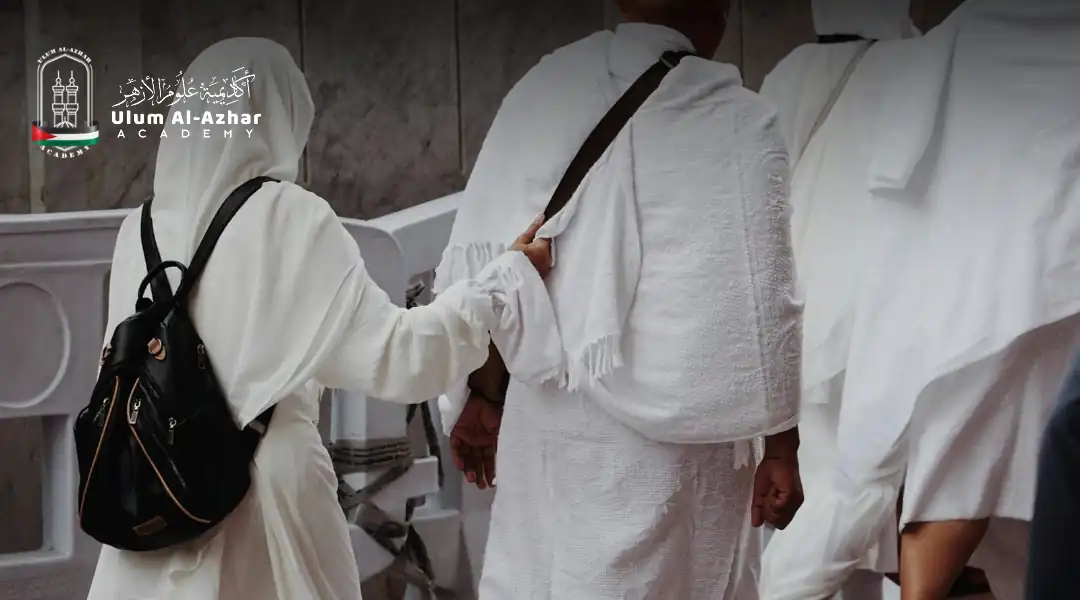
11th to 13th of Dhul Hijjah – Days of Tashreeq ( stay overnight in Mina for Stoning the minor Jamarat al-Aqabah until Tawaf al-Wada‘ )
The pilgrim must stay overnight in Mina and make sure they are within its boundaries. Pilgrims should be keen to perform the obligatory prayers in congregation and increase in remembrance of Allah, glorification, seeking forgiveness, and supplication. After Dhuhr prayer, the pilgrim begins the stoning ritual starting with the small Jamrah. Seven pebbles are thrown one after another while saying “Allahu Akbar” with each throw, ensuring that every pebble lands inside the basin. After completing the stoning, the pilgrim faces the Qiblah and makes supplications for personal and communal goodness. The pilgrim then proceeds to the middle Jamrah and throws seven consecutive pebbles, again saying “Allahu Akbar” with each pebble. Afterward, the pilgrim faces the Qiblah and makes further supplications. Next, the pilgrim goes to the large Jamrah (Jamrat al-Aqabah) and throws seven consecutive pebbles while saying “Allahu Akbar” with each throw. After completing the stoning of the large Jamrah, the pilgrim leaves without stopping for supplication afterward. On the 12th and 13th of Dhul Hijjah, the pilgrim performs the same stoning rituals carried out on the 11th, throwing pebbles at the three Jamarat after Dhuhr prayer in the prescribed order. On the 12th of Dhul Hijjah, if the pilgrim wishes to leave early (Ta‘ajjul)تَعَجُّل , they must depart from Mina before sunset. If the pilgrim plans to return home, they should go to Masjid al-Haram to perform Tawaf al-Wada‘ طواف الوداع (the Farewell Tawaf). Likewise, on the 13th of Dhul Hijjah, when preparing to leave Mecca, the pilgrim should perform the Farewell Tawaf before departure. Menstruating and postpartum women are permitted to leave Mecca without performing Tawaf al-Wada‘, and there is no penalty upon them.With this, the blessed rituals of Hajj are completed.
Preparing for Hajj Spiritually
Preparing for the islamic hajj date is not only about travel arrangements and documents. Spiritual preparation is equally important. Indeed, Hajj is a great spiritual nourishment through which the Muslim’s heart becomes filled with reverence and piety toward Allah Almighty, sincere determination to obey Him, and true repentance and distance from sin. During Hajj, love for Allah, His Messenger Prophet Muhammad, and the righteous believers grows and flourishes, while feelings of affection, brotherhood, and unity come together among sincere Muslims.Sincere Repentance
Pilgrims should begin by sincerely repenting from sins and asking forgiveness from Allah and from people they may have wronged. Hajj is an opportunity for purification and renewal.Learning the Rituals
Understanding the rites before traveling helps pilgrims perform worship correctly and peacefully. Studying the meaning behind each ritual deepens spiritual connection during the journey.Strengthening Prayer
Before the islamic hajj date arrives, Muslims should strengthen their relationship with Allah through regular prayer, Quran recitation, remembrance, and supplication.Patience and Good Character
Hajj requires patience, kindness, and self-control. Large crowds and physical exhaustion can test a person’s character. Pilgrims should train themselves to avoid arguments, anger, and harmful speech.Making Intentions Pure
Hajj should never be performed for status, praise, or social recognition. The journey is an act of worship done sincerely for Allah alone.Seeking Beneficial Knowledge
Learning about the history of Prophet Ibrahim, Hajar, and Prophet Muhammad helps pilgrims appreciate the spiritual roots of Hajj. The rituals connected to the islamic hajj date are not empty actions. Every movement carries lessons about faith, sacrifice, obedience, humility, and trust in Allah. online Islamic studies program offers an introduction to the foundational principles and classifications of Islamic sciences.
Conclusion
The islamic hajj date marks one of the holiest periods in the Islamic calendar. Every year, Muslims eagerly await the beginning of Dhul Hijjah to witness and participate in this sacred journey of worship and devotion. Understanding the islamic hajj date helps believers prepare for Hajj properly, appreciate the significance of the Day of Arafah, and follow the blessed rituals connected to the pilgrimage. From Mina to Arafah and from Muzdalifah to the Kaaba, every step of Hajj carries profound spiritual meaning. Curate your Islamic learning journey: schedule a free consultation with Al-Azhar-certified Sheikhs from Egypt.FAQs
What is the islamic hajj date?
The islamic hajj date is the period from the 8th to the 13th of Dhul Hijjah when Hajj rituals are performed.Why does the islamic hajj date change every year?
Because the Islamic calendar is lunar, the dates shift earlier each Gregorian year.What is the most important day of Hajj?
The Day of Arafah on the 9th of Dhul Hijjah.Can non-pilgrims benefit from these days?
Yes. They can fast, pray, give charity, and increase worship.