
What Breaks Your Fast in Islam? Clear and Simple Guide
Table of Contents
One of the beauties of our Islamic religion, and a sign of its perfection in legislation and acts of worship, is that it has diversified these acts in their types, forms, and timing.
It has varied them in time: daily acts of worship such as the five daily prayers, weekly acts such as the Friday prayer, annual acts such as fasting and zakah, and lifetime acts such as Hajj.
It has also diversified them in form and manner: physical acts of worship like prayer, financial acts such as zakah, and acts that combine both physical and financial aspects, as seen in Hajj and jihad. All of this is meant to give faith in the heart multiple outward expressions that reflect it, affirm it, and strengthen it.
The purpose is to establish for us a unique, divinely guided system of worship that refines the human soul in a comprehensive and complete way, addressing all its dimensions. As part of this refinement, Allah has specified for us what we must refrain from during the fast of Ramadan and what is permissible.
Because of this, many Muslims – in Canada and many other countries- frequently ask: what breaks your fast in Islam? Here we offer a clear and simple guide that explains what breaks your fast in Islam in an easy, structured way, based on well-established Islamic principles, scholarly consensus, and balanced understanding. It also highlights common mistakes and practical advice to help you protect your fast from nullification.
What Breaks Your Fast in Islam Clearly Explained
To understand what breaks your fast in Islam, we must first understand the essence of fasting. Fasting means intentionally abstaining, from dawn (Fajr) until sunset (Maghrib), from specific actions that invalidate the fast, while maintaining the correct intention (niyyah).
We find no description more comprehensive than the statement of the Messenger of Allah ﷺ regarding fasting:
“Fasting is a shield.”
A shield is something that covers, protects, and guards against harm and weapons. The meaning is that fasting serves as a form of covering, protection, and safeguard.
Scholars distinguish between:
- Major invalidators that completely nullify the fast
- Actions that do not break the fast
- Behaviors that reduce the reward but do not invalidate it
Clarifying these categories helps Muslims avoid confusion and unnecessary anxiety about what breaks your fast in Islam.
Your Islamic learning adventure begins! Join free consultation with Al-Azhar-certified Sheikhs from Egypt.
Actions That Invalidate the Fast Completely
The scholars have unanimously agreed on several matters that invalidate the fast, and they answer the question: what breaks your fast in Islam, they are:
1/ Eating and drinking deliberately, not out of forgetfulness, mistake, or coercion—whether one consumes something nourishing or non-nourishing during the daytime of a fasting day. Allah تعالى says:
“And eat and drink until the white thread of dawn becomes distinct to you from the black thread. Then complete the fast until night.” (Al-Baqarah: 187)
As for one who does not act deliberately, the Prophet ﷺ said:
“Allah has pardoned my nation for mistakes, forgetfulness, and what they are forced to do.”
Join us in a more detailed discussion about when can you eat on Ramadan.
2/ Intentional vomiting, based on the narration reported by Aḥmad, Abū Dāwūd, al-Tirmidhī, and others from the Prophet ﷺ:
“Whoever is overcome by vomiting does not have to make up the fast, but whoever vomits deliberately must make it up.”
The meaning of “is overcome” is that it happens involuntarily.
3/ Sexual intercourse, meaning a husband having intercourse with his wife, based on the previously mentioned verse and because the Prophet ﷺ ordered the one who had intercourse during Ramadan to offer expiation.
4/ Deliberate ejaculation (masturbation), whether by the hand, by other means, or through intimate stimulation with one’s spouse, if that results in ejaculation.
This is the opinion of the majority of scholars. As for one who has a wet dream while asleep, his fast is not invalidated.
5/ Menstruation and postnatal bleeding in women. There is scholarly consensus on this ruling.
6/ Intending to break the fast while still fasting, by mere firm intention—provided the intention is definite and lacking nothing except actual execution. Whoever intends during a day of Ramadan to terminate the fast must make up that day and continue abstaining for the remainder of the day.
Things That Do Not Break the Fast
Except for what has been mentioned previously, the following matters are not among the invalidators of fasting.Understanding these helps avoid hardship and confusion about what breaks your fast in Islam. That is, the fasting person’s fast is not broken by any of the following:
- If a fasting person eats or drinks out of forgetfulness, the fast remains valid. This reflects divine mercy and ease.
- Anything entering the body through a route other than the mouth or nose, provided it is not nourishing. This includes the use of non-nutritional injections, such as therapeutic injections, including painkillers, antibiotic injections, and insulin injections for people with diabetes.
- Using an asthma inhaler.
- Using oxygen or medical steam for patients.
- Smelling pleasant scents, such as perfume, basil, and incense, because a smell has no physical substance that enters the stomach, and there is no legal evidence prohibiting the fasting person from this. However, inhaling incense should be avoided, as it has particles that may reach the stomach.
Learn Shariah through the method of Talaqqi Kitab Turath (Traditional Study) and get certificates endorsed by scholars from AL Azhar (Ijazah Sanad).
- The coming out of a small amount of blood from any part of the body, such as nosebleeds, bleeding from hemorrhoids, tooth extraction, wounds, needle pricks, and similar cases, or a small amount of blood drawn for testing, or bleeding from the gums due to using the miswak or a toothbrush.
None of this breaks the fast, because it is not cupping (ḥijāmah) nor similar to it, as it does not affect the body the way cupping does. The basic principle is that the fast remains valid unless there is evidence to invalidate it.
- The coming out of a large amount of blood without the person’s choice, such as due to a car accident or other causes. However, if the person becomes weak and needs to break the fast, they may do so and must make up the day later.
- Vomiting that occurs involuntarily.
- The discharge of pre-ejaculatory fluid (madhy). Scholars have differed regarding whether it breaks the fast, but the correct view is that it does not invalidate the fast.
- Kissing, whether with desire or without desire. However, a person who cannot control himself and fears falling into intercourse or ejaculation due to desire is not permitted to do so, in order to block the means to what is forbidden and to protect the fast from invalidation.
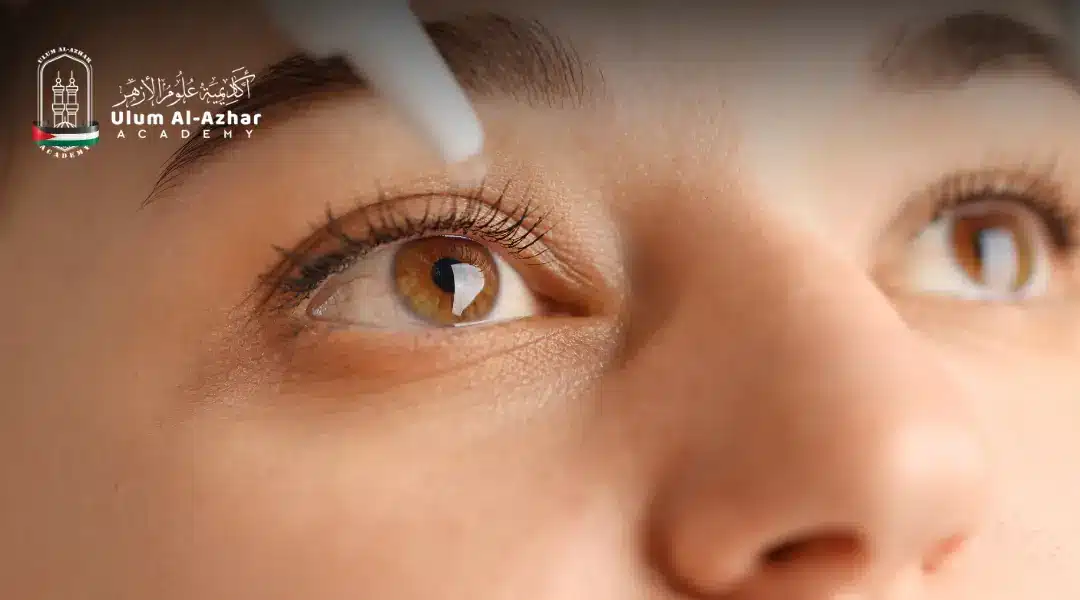
- Eye drops, ear drops, ear irrigation, nasal drops, or nasal spray, provided that none of it reaches the throat.
- Anything inserted into the vagina, such as suppositories, medicinal washes, a vaginal speculum, or a finger used for medical examination.
- Insertion of medical instruments into the uterus, such as an endoscope, an intrauterine device (IUD), or similar instruments.
- Anything inserted into the urethra (the external urinary passage for both males and females), such as a catheter (a thin tube), an endoscope, contrast material used in imaging, medication, or a solution used to wash the bladder.
- Dental procedures, such as drilling a tooth, extracting a molar, cleaning the teeth, or using the miswak or a toothbrush, provided that one avoids swallowing anything that reaches the throat.
Scholars have differed regarding anything inserted into the rectum, since it is part of the digestive tract. Therefore, it is safer to delay anything related to this until after breaking the fast.

Common Mistakes People Make While Fasting
Many fasting errors come not from ignorance of religion, but from misunderstandings about what breaks your fast in Islam. These are some mistakes people make while fasting:
- Failing to avoid sins while fasting is a common mistake. You may find a fasting person carefully avoiding physical invalidators such as eating, drinking, and sexual relations, yet not guarding himself against sins like backbiting, gossip, cursing, verbal abuse, or looking at forbidden things. The Prophet ﷺ said:
“Whoever does not give up false speech and acts upon it, Allah has no need for him to give up his food and drink.”
- Another mistake is abandoning certain Sunnah practices under the assumption that they are not permissible while fasting, such as leaving off rinsing the mouth and nose out of fear that water might reach the throat. In reality, what is prohibited is exaggeration that could cause water to reach the stomach. Laqīt ibn Ṣabirah رضي الله عنه reported that the Prophet ﷺ said:
“Perform ablution thoroughly, clean between the fingers, and exaggerate in rinsing the nose—unless you are fasting.”
Similarly, some people avoid using the miswak after midday out of fear of sin, whereas the correct view is that using the miswak is recommended for the fasting person both before and after midday.
- Another error is being overly cautious about swallowing saliva during the daytime in Ramadan, thinking that swallowing one’s saliva invalidates the fast. This is incorrect, as there is no evidence in Islamic law that swallowing saliva is among the things that break the fast.
- Another mistake is deliberately eating or drinking at the time of the Fajr adhan or after it. What a Muslim should do is take precautions regarding his fast and stop eating and drinking as soon as he hears the adhan.
- Among the mistakes as well is the belief held by some Muslims that being in a state of major ritual impurity (janabah) before the Fajr adhan invalidates the fast if ghusl is delayed until after dawn. The correct view is that the fast remains valid even if ghusl is delayed until after the Fajr adhan. The Prophet ﷺ would sometimes reach dawn while in a state of janabah from his family, then he would perform ghusl and continue fasting.
Understanding the essential aspects of Islamic purification (Taharah) and prayer practices under the supervision of qualified teachers from Al-Azhar Al-Shariff, Egypt.
- Another mistake is Failing to make the intention for an obligatory fast during the night or before the break of dawn is another mistake. It has been authentically reported that the Prophet ﷺ said:
“Whoever does not form the intention to fast before dawn, there is no fast for him.”
How to Protect Your Fast From Nullification
Allah has prescribed fasting for a great and noble purpose: to attain consciousness of Allah (taqwa), to purify the soul, and to refine moral character. The goal of fasting is not to cause harm or hardship to people. The more fasting conforms to Islamic rulings and proper manners, the more fruitful it becomes and the greater its reward.
For this reason, a Muslim should protect himself from anything that may spoil his fast by:
– Recognizing the virtues of the blessed month, and welcoming it in a manner different from the rest of the year—preparing for obedience, practicing moderation, and sharing with the poor and the needy, rather than focusing excessively on buying food and drinks.
– Gaining proper understanding of the rulings of fasting and asking about what breaks your fast in Islam, as fasting in Ramadan is an obligation and an act of worship that a Muslim must know how to perform correctly and in an acceptable manner. This includes knowing its pillars, obligations, recommended acts, disliked matters, and the things that invalidate the fast.
The online Islamic studies program aims to introduce the principles of Islamic sciences: the definitions, objectives, and classifications of different Islamic disciplines. The student will have the opportunity to apply these concepts with qualified teachers from Al Azhar Al Sharif.
Conclusion
Understanding what breaks your fast in Islam is essential for every Muslim all over the world – such as in Canada and other Western countries – who wants to fast correctly and confidently. Islam provides clear guidance, balanced rulings, and great mercy. The fast is invalidated only by specific, intentional actions, not by honest mistakes or unavoidable situations.
Fasting is a journey of self-discipline, patience, and spiritual growth. When approached with knowledge and sincerity, it becomes a source of immense reward and inner peace. By learning what breaks your fast in Islam, you protect not only your fast, but also its deeper meaning and purpose.
Start your spiritual growth journey; it begins with free consultation and Al-Azhar-certified Sheikhs in Egypt.
FAQs
What breaks your fast in Islam?
Eating, drinking, sexual intercourse, intentional vomiting, deliberate ejaculation (masturbation), menstruation and postnatal bleeding in women and Intending to break the fast while still fasting
Does forgetting and eating break the fast?
No, eating or drinking out of forgetfulness does not break the fast.
Does vomiting break the fast?
Only intentional vomiting breaks the fast. Involuntary vomiting does not.
Do injections break the fast?
Non-nutritional injections do not break the fast.
Does bad behavior break the fast?
It does not invalidate the fast legally, but it reduces or removes its spiritual reward.
Why is it important to know what breaks your fast in Islam?
Knowing what breaks your fast in Islam helps you worship with confidence, avoid mistakes, and fully benefit from the spiritual value of fasting.
