
Hajj Throwing Stones Explained Step by Step Guide
Table of Contents
Pilgrims stand on the plain of Arafat, the greatest pillar of Hajj. It is the Day of Freedom from the Fire for those who stand at Arafat and for Muslims in all lands who are not performing Hajj. For this reason, the following day became a celebration for all Muslims everywhere. On this day and during the three days that follow, pilgrims perform one of the important rituals of Hajj known as hajj throwing stones, also called the stoning of the Jamarat.
Throwing the Jamarat is one of the obligatory acts of Hajj, and whoever leaves it must offer a sacrifice and distribute it to the poor of Makkah. This ritual carries deep spiritual meanings connected to obedience, patience, and resisting temptation.
In this detailed guide, you will learn everything about hajj throwing stones, including its meaning, why Muslims perform it, how to do it step by step, common mistakes to avoid, and important safety tips.
Offering a free consultation with Al-Azhar-certified Sheikhs from Egypt to help you begin personalized Islamic learning.
What Is Hajj Throwing Stones Ritual
Throwing الرمي, in Arabic, means casting or tossing القذف.
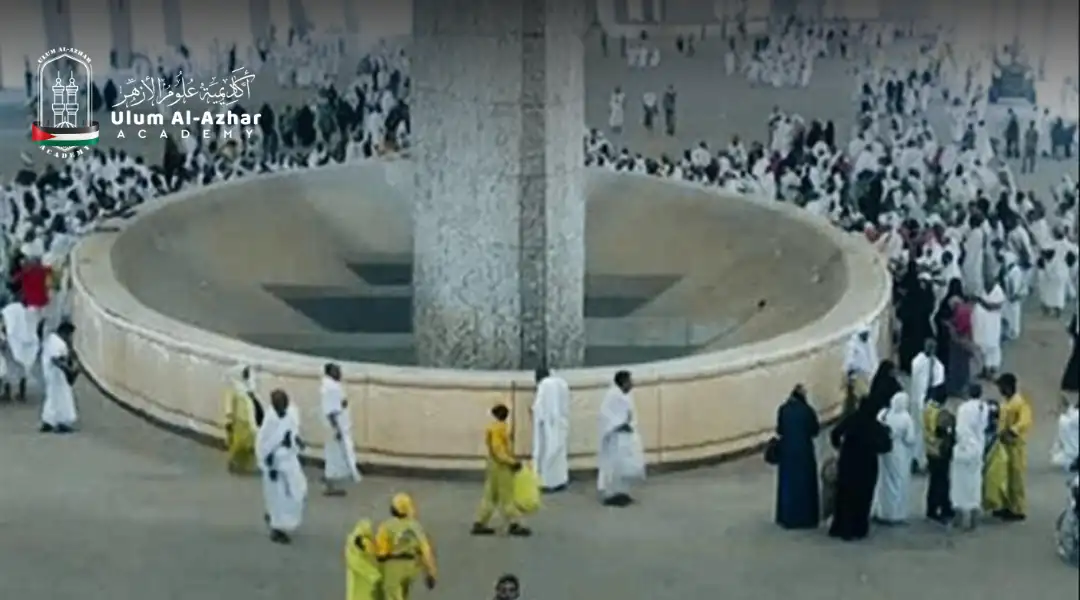
The Jamarat are small stones; the word is the plural of jamrah, meaning a small pebble. The place of the Jamarat in Mina was called “Jamrah” because pebbles are thrown there. The pebble used for stoning should be slightly larger than a chickpea and smaller than a hazelnut.
Hajj throwing stones is one of the rituals of Hajj. It follows the example of Prophet Ibrahim عليه السلام as he rejects Satan’s whispers and represents obedience to Allah and submission to His command.
On the Day of Eid al-Adha, pilgrims throw stones only at the largest pillar. During the following days, they throw stones at all three pillars in a specific order.
The Locations and Number of the Jamarat
There are three Jamarat in Mina (three specific pillars):
- The Largest Jamrah (Jamarat al-Aqabah al-Kubra)
It is the last Jamrah from the direction of Mina and the first from the direction of Makkah. It is located on the left side of a person entering Mina.
It was called Jamarat al-Aqabah because it used to be located near a mountain pass with a difficult ascent. Today, the mountain area has been removed to expand the space and make it easier for pilgrims.
This is the Jamrah with which pilgrims begin after returning from Muzdalifah, as it is considered the greeting of Mina.
- The Middle Jamrah (Al-Jamarah al-Wusta)
This Jamrah comes after Jamarat al-Aqabah in the direction of Muzdalifah. The distance between it and the largest Jamrah is about 116 meters.
- The Small Jamrah (Al-Jamarah al-Sughra)
This is the farthest Jamrah from Makkah and the closest to Mina. It comes after the middle Jamrah and is near Masjid al-Khayf in Mina. The distance between it and the middle Jamrah is about 156 meters.
Modern bridges have been built connecting all the Jamarat, with multiple levels added so pilgrims can perform the stoning ritual safely and without harm.
Why Muslims Perform This Ritual
The origin of the legislation of hajj throwing stones goes back to our father, Prophet Ibrahim Al-Khalil عليه السلام. It was narrated from Ibn Abbas رضي الله عنه that he attributed to the Prophet ﷺ:
“When إبراهيم عليه السلام came to perform the rituals of Hajj, Satan appeared to him at Jamarat al-Aqabah, so he threw seven pebbles at him until he sank into the earth. Then he appeared to him at the second Jamrah, so he threw seven pebbles at him until he sank into the earth. Then he appeared to him at the third Jamrah, so he threw seven pebbles at him until he sank into the earth.”
Ibn Abbas رضي الله عنه then said:
“You are stoning Satan and following the religion of your father Ibrahim.”
Because of this, throwing the Jamarat became one of the clear and visible rituals of Hajj, and Allah Almighty commanded Muslims to honor His sacred rites. Therefore, the pilgrim throws stones at Jamarat al-Aqabah on the morning of Eid al-Adha, then throws stones at all three Jamarat on each of the Days of Tashreeq after noon, beginning with the small Jamrah, then the middle Jamrah, and finally the largest Jamrah.
Spiritual Lessons Behind Hajj Throwing Stones
The ritual of hajj throwing stones carries timeless lessons that continue long after Hajj ends. The main lessons of hajj throwing stones is:
– It represents submission and complete obedience to Allah Almighty, worshipping Him alone without any partner. The true motivation behind a sincere believer’s obedience to Allah’s commands should be the absolute acceptance of His orders and prohibitions.
– This ritual also symbolizes sincere devotion to Allah alone, and it carries another meaning: showing contempt for everything worshipped besides Him — whether it is Satan, idols, stones, or anything else — as the believers reject and despise them by casting pebbles at them.
Step-by-Step Guide to Stoning
Understanding the correct process of hajj throwing stones helps pilgrims perform the ritual calmly and properly.
Step 1: Collect the Pebbles
Pilgrims collect small pebbles from Mina or Muzdalifah Or from any place the pilgrim wishes. The pebbles should be small, roughly the size of chickpeas. Large stones or shoes should never be used.
Most pilgrims need:
- 7 pebbles for the 10th of Dhul Hijjah
- 21 pebbles for each of the 11th and 12th
- Additional pebbles if staying for the 13th
This means many pilgrims collect around 49 to 70 pebbles in total.
Step 2: Go to Mina and Stone Jamarat al-Aqabah on Eid Day
On day 9th Dhul Hijjah – after the day of Arafat ends- pilgrims spend the night in Muzdalifah.
On the 10th day, the day of Eid Al-Adha (Yawm al-Nahr), the pilgrim performs the Fajr prayer at the mosque in Muzdalifah, then sets out toward Masjid al-Haram. On the way, the pilgrim passes through Mina to stone only Jamarat al-Aqabah al-Kubra (the largest Jamrah) by seven pebbles,for each pebble:
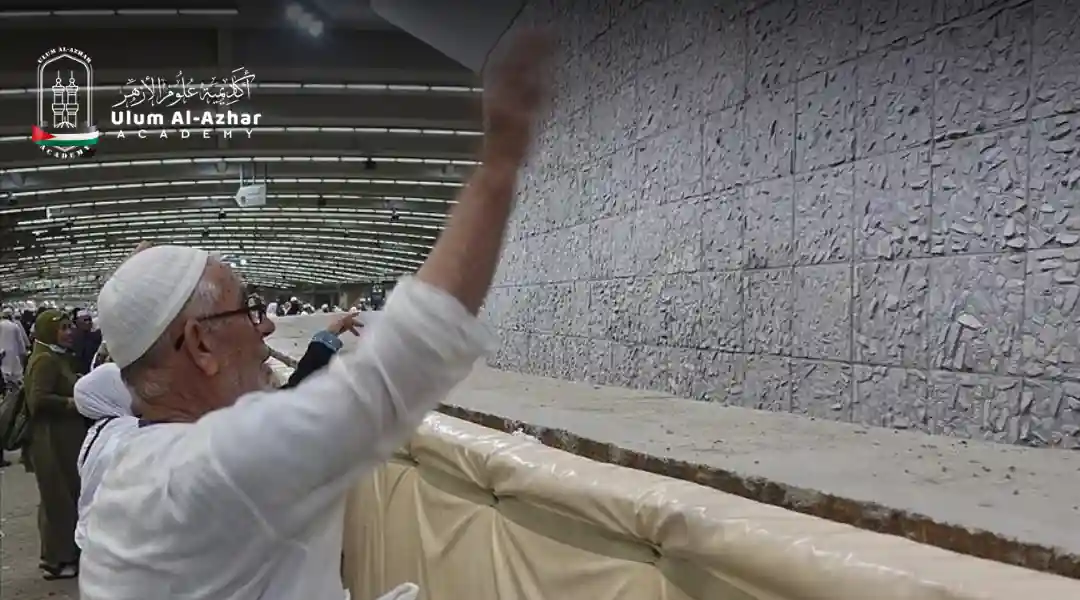
- Throw one pebble at a time
- Say “Allahu Akbar”
- Ensure the pebble lands within the designated area
The Sunnah is to perform it after sunrise, following the practice of the Prophet ﷺ.
Step 3: Perform Other Hajj Rituals
On the same day 10th Dhul Hijjah, after the first day of hajj throwing stones, pilgrims continue with other important rituals such as:
- Animal sacrifice For those performing Hajj Tamattuʿ or Hajj Qiran.
- Shaving or trimming the hair
- Tawaf al-Ifadah in Masjid al-Haram and said’.
Step 4: Stone All Three Jamarat on Days of Tashreeq
On the 11th, 12th and 13th of Dhul Hijjah, pilgrims throw seven pebbles at each of the three pillars – this totals 21 pebbles per day-. The pilgrim begins with the small Jamrah, then the middle Jamrah, and finally the large Jamrah. Each Jamrah is stoned with seven pebbles. It is recommended to say “Allahu Akbar” with each pebble thrown.
After stoning the small and middle Jamarat, it is recommended to stand facing the Qiblah and make supplication. Then the pilgrim stones Jamarat al-Aqabah from the inside of the valley and does not stop there afterward.
The proper time for stoning begins after the sun passes its zenith, which is the time of the Dhuhr adhan, following the practice of the Prophet ﷺ and his Companions رضي الله عنهم.
However, according to a valid scholarly opinion, stoning before noon is also permissible. If it had been prohibited, the Prophet ﷺ would have clarified it, especially since performing acts of worship at the earliest time often brings ease to the people and allows more flexibility.
The time for stoning ends at sunset each day. If it becomes difficult to perform the ritual before sunset, then according to the stronger scholarly opinion, there is no harm in performing the stoning at night.
If the pilgrim wishes to leave early, he must depart from Mina before sunset on the twelfth day. If the pilgrim intends to return to his homeland, he must go to Masjid al-Haram to perform the Farewell Tawaf (Tawaf al-Wadaʿ).
Common Mistakes to Avoid
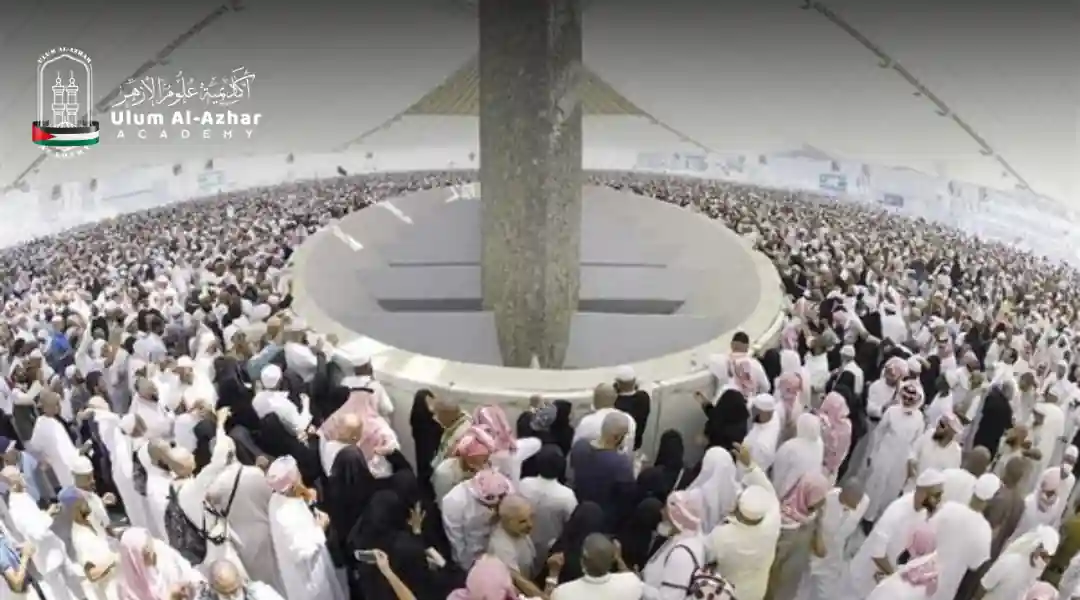
Because of large crowds and emotional intensity, some pilgrims make mistakes during hajj throwing stones. Avoiding these errors helps ensure the ritual is valid and safe.
Mistake 1:
Some pilgrims believe that the stoning is only valid if the pebbles are collected from Muzdalifah. Because of this misconception, many of them struggle greatly to gather pebbles there before heading to Mina.
This belief is incorrect. The pebbles may be collected from anywhere — from Muzdalifah, Mina, or any other suitable place.
There is no authentic narration stating that the Prophet ﷺ specifically collected the pebbles only from Muzdalifah.
Mistake 2:
Some pilgrims throw all the pebbles at once during the stoning ritual.
The correct method is to throw each pebble separately by hand, one throw for each stone. It is not permissible to throw all the pebbles together at one time or to throw more than one pebble in a single throw.
Mistake 3:
Some pilgrims use other objects for the stoning ritual instead of pebbles.
The correct practice is to throw small pebbles. It is not permissible to throw mud, metal, shoes, or any other objects.
Mistake 4:
Some pilgrims are careless and do not pay attention to whether the pebble actually lands inside the designated area of the Jamrah.
The correct ruling is that if the pebble does not land within the target area, the throw is not valid. It is sufficient for the pilgrim to believe with reasonable certainty that the pebble landed in the basin, and absolute certainty is not required because that may be difficult to achieve in such crowded conditions.
Therefore, if the pebble falls into the basin, the obligation is fulfilled whether the pebble remains there or rolls out afterward.
Mistake 5:
Some pilgrims believe that the pebble must hit the pillar itself for the stoning to be valid.
This belief is incorrect. It is not a condition for validity that the pebble strikes the pillar. The pillar was only placed as a marker for the stoning area. As long as the pebble lands within the designated basin, the throw is valid whether it hits the pillar or not.
Mistake 6:
Some pilgrims neglect the stoning ritual and appoint someone else to perform it on their behalf despite being physically able to do it themselves.
This is a serious mistake because throwing the Jamarat is one of the rituals and rites of Hajj. A pilgrim should perform it personally and should not appoint another person as a representative as long as he is capable of doing it himself.
Safety Tips Every Pilgrim Should Know
Safety is extremely important during hajj throwing stones because millions of people gather in a limited area. Saudi authorities organize crowd management carefully, but pilgrims should also take precautions.
- Stay With Your Group
- Avoid Peak Crowds
- Carry Water
- Wear Comfortable Footwear
- Follow Official Instructions
- Take Care of Elderly Pilgrims
Learning Shariah helps you gain a deeper understanding of the rituals of Hajj. Learning Shariah for beginners | Ar-Riwaq Al-Azhari is your guide in understanding and mastering Hadith & Sunnah, Fiqh & Islamic Jurisprudence, Tadarus & Tadbbur Al- Quran, Aqidah & Faith, and Syamail & Adab. Build up a strong faith with qualified teachers from Al-Azhar Al-Sharif.

Conclusion
The ritual of hajj throwing stones is one of the most meaningful parts of the pilgrimage. Although it appears simple outwardly, it contains profound spiritual lessons about obedience, patience, self-control, and rejecting evil.
By understanding the proper method, avoiding common mistakes, and following safety guidelines, pilgrims can perform this ritual with confidence and tranquility. More importantly, the lessons learned during hajj throwing stones should continue to inspire Muslims long after returning home from Hajj.
Engage in a free consultation with Al-Azhar-certified Sheikhs from Egypt to tailor your Islamic learning experience.
FAQs
What does hajj throwing stones symbolize?
The ritual symbolizes rejecting Satan and resisting evil temptations, following the example of Prophet Ibrahim (peace be upon him).
How many stones are used during Hajj?
Pilgrims usually use between 49 and 70 pebbles depending on the number of days they remain in Mina.
Where does hajj throwing stones take place?
The ritual takes place at the Jamarat area in Mina near Makkah.
Can women perform the stoning ritual?
Yes, women perform hajj throwing stones just like men. They may choose less crowded times for greater comfort and safety.
Is it necessary for every pebble to hit the pillar directly?
The pebble should land within the designated basin area around the pillar.
Can someone perform the ritual on behalf of another person?
Yes, if a pilgrim is physically unable due to illness, old age, or severe weakness, another person may perform the stoning on their behalf.
What should pilgrims say while throwing the stones?
Pilgrims say “Allahu Akbar” with each pebble they throw during the ritual.
