
How Long Does Hajj Take? How Many Days in Hajj Explained
Table of Contents
Hajj is a complete spiritual school in which a person learns the meanings of patience, humility, obedience, and detachment from worldly matters. We all know how long does hajj take, that is why Hajj has had a profound impact on the hearts of Muslims throughout the ages, especially in our time amid a world filled with materialism and constant distractions.
The answer to how long does hajj take depends on different factors, including the type of Hajj a pilgrim performs, travel arrangements, and whether the pilgrim stays additional days in Mina after the major rituals are completed. However, the essential rites of Hajj are generally completed over five to six main days during the month of Dhul Hijjah.
This guide explains everything in detail, including the daily schedule, required and optional rituals, travel planning, and what pilgrims can expect during each stage of the journey.
How Long Does Hajj Take From Start to Finish
The answer of how long does hajj take is: the core rituals of Hajj officially begin on the 8th day of Dhul Hijjah and continue until the last day of Eid Al-Adha 13th day of Dhul Hijjah. This means the main rites usually take about 6 days.
An option can make the number of days shorter: A pilgrim is permitted to complete the Hajj early on the 12th day instead of the 13th, making the duration of Hajj five days instead of six.
As the days of stoning the Jamarat (the major, middle, and minor Jamarat) continue for three days, from the 11th to the 13th of Dhul Hijjah. If the pilgrim wishes to leave early and shorten these days, they must depart from Mina before sunset on the 12th day.
If the pilgrim intends to return to their homeland, they must go to Al-Masjid al-Haram to perform the Farewell Tawaf (Tawaf al-Wada’). Menstruating and postpartum women are permitted to leave Makkah without performing the Farewell Tawaf, and there is no blame upon them.
Start your tailored Islamic learning with a free consultation from Al-Azhar-certified Sheikhs in Egypt.
Why Some Hajj Journeys Take Longer Than Others
The days of Hajj may be longer for those performing Tamattu’ or Qiran Hajj.
Tamattu’ Hajj – performing Umrah first, then Hajj separately
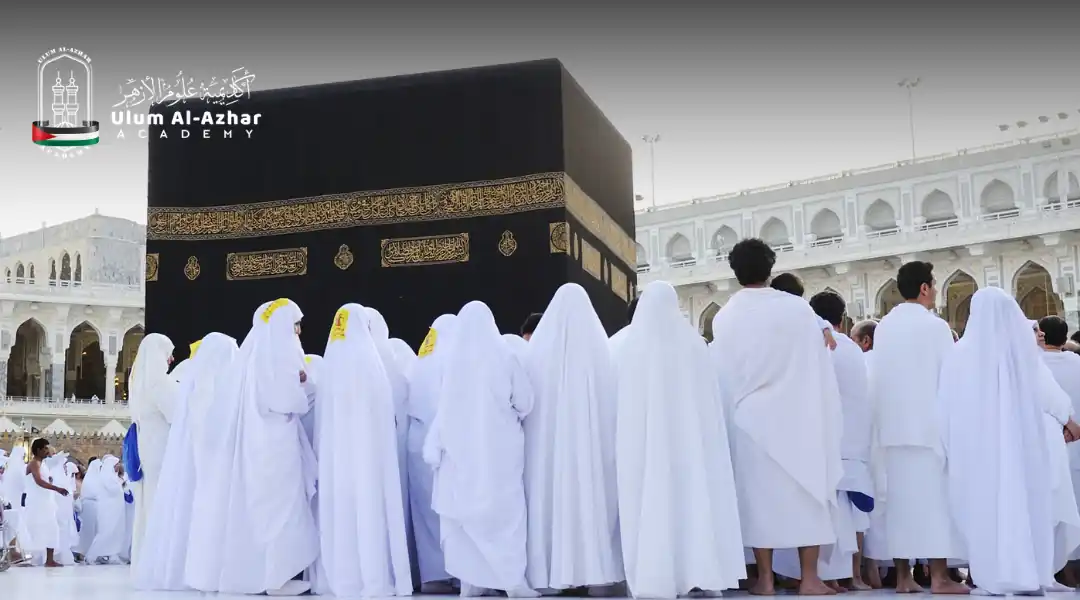
In Tamattu’ Hajj, the pilgrim enters into Ihram from the Miqat intending only Umrah, saying: “Labbayka Allahumma Umrah.” Upon reaching the Kaaba, the pilgrim stops reciting the Talbiyah, then enters Al-Masjid al-Haram and performs Tawaf around the Kaaba for seven circuits. After that, they pray two rak‘ahs behind Maqam Ibrahim, or anywhere convenient within the Sacred Mosque.
The pilgrim then performs Sa‘i between Safa and Marwah for seven rounds, beginning at Safa and ending at Marwah.
After completing the seventh round at Marwah, the man shaves or trims his hair, while the woman cuts a small portion of her hair. At this point, the rites of Umrah are completed, and the pilgrim exits the state of Ihram until the Day of Tarwiyah arrives.
On the 8th of Dhul Hijjah, the pilgrim enters Ihram again for Hajj from their place of residence and begins the rites of Hajj with Tawaf al-Qudum. A pilgrim performing Tamattu’ Hajj is required to sacrifice a sheep on the 10th of Dhul Hijjah.
Qiran Hajj – combining Umrah and Hajj together
For Hajj al-Qiran, the Muslim enters into Ihram from the Miqat for both Umrah and Hajj together, saying: “Labbayka Allahumma Umratan wa Hajjan.” The pilgrim continues reciting the Talbiyah until reaching the Kaaba, where they perform seven circuits of Tawaf, known as Tawaf al-Qudum (the Arrival Tawaf).
Afterward, the pilgrim prays two rak‘ahs behind Maqam Ibrahim. If the pilgrim performs Sa‘i at this stage, it counts for both Umrah and Hajj. However, if the Sa‘i is delayed until after the stoning of Jamrat al-Aqabah, there is no harm in doing so.
The pilgrim remains in the state of Ihram and then leaves the Sacred Mosque area to continue the rituals of Hajj with the arrival of the Day of Tarwiyah on the 8th of Dhul Hijjah.
A pilgrim performing Hajj al-Qiran is also required to offer a sacrificial animal (Hady) on the 10th day of Dhul Hijjah, just like the pilgrim performing Hajj al-Tamattu’.
Required vs Optional Rituals
Hajj has several conditions: Islam, puberty, sanity, freedom and financial and physical ability.
How long does hajj take ! Yes, Hajj is a long and demanding journey, but its reward is the forgiveness of all previous sins. Hajj includes specific rites, some of which are pillars, some obligatory acts, and others recommended Sunnah acts.
What is the difference between a pillar and an obligation?
The pillars of Hajj are four. Whoever leaves one of these pillars has an invalid Hajj. They are:
- Ihram
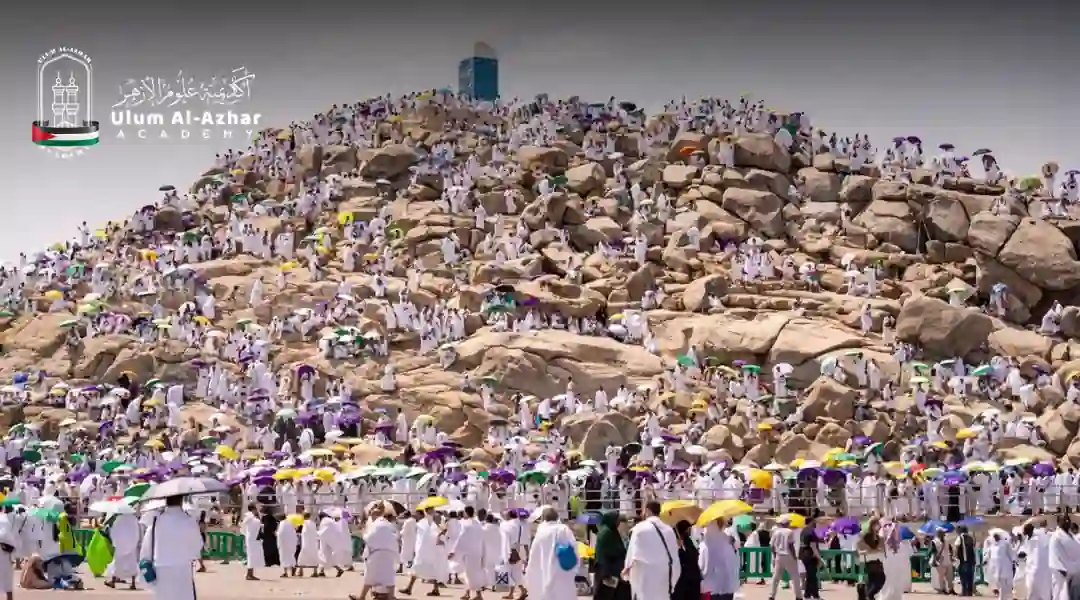
- Standing at Arafah
- Tawaf al-Ifadah
- Sa‘i between Safa and Marwah
As for the obligatory acts, Hajj remains valid without them, but a Muslim who deliberately leaves one of the obligatory acts of Hajj must sacrifice a sheep and distribute it to the poor of the Haram. If they are unable to offer the sacrifice, then they must fast for ten days: three during Hajj and seven after returning to their homeland.
The obligatory acts are seven:
- Entering Ihram from the Miqat.
- Remaining at Arafah until sunset for those who stood there during the daytime.
- Staying overnight in Muzdalifah until dawn. Those with valid excuses, such as the sick, women, and those accompanying them, may leave after midnight.
- Staying overnight in Mina during the three days of Tashreeq. Whoever chooses to leave early must depart from Mina before sunset on the 12th of Dhul Hijjah.
- Stoning Jamrat al-Aqabah al-Kubra on the Day of Eid (10th of Dhul Hijjah) after leaving Muzdalifah, and stoning the three Jamarat in order — the minor, middle, then major — during the three days of Tashreeq (or two days for those who leave early) after the Dhuhr Adhan. Each Jamarah is stoned with seven pebbles.
- Shaving the head or shortening the hair.
- Performing the Farewell Tawaf before leaving Makkah. Menstruating and postpartum women are exempt from this and do not have to offer a sacrifice because of their valid excuse.
Common Challenges Pilgrims Face During Long Hajj Trips
The phrase “how long does hajj take” also reflects the hardships and challenges faced by pilgrims, including:
Tawaf: Crowding becomes very intense during Tawaf, especially near the Black Stone. Therefore, a Muslim should not push and harm others in order to kiss or touch the Black Stone, because the harm caused to people is far greater than the reward of that act.
Standing at Arafah: as in Arafah all pilgrims gather in one place at the same time, and then depart together, which causes hardship and difficulty for many people.
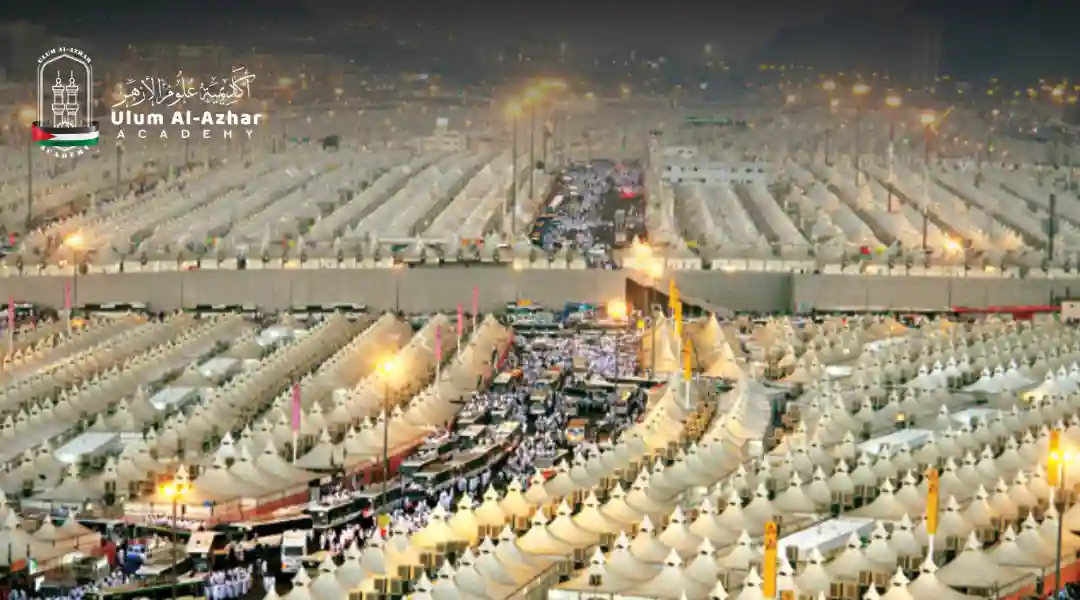
Muzdalifah: The difficulty there lies in the limited availability of services found in other places, especially restroom facilities.
Stoning the Jamarat: In this area, people sometimes push and struggle against one another. Wisdom is shown by avoiding harm to others, throwing the pebbles from an appropriate distance, and avoiding harmful actions such as throwing shoes or pieces of wood, which may injure pilgrims.
Farewell Tawaf: Pilgrims usually try to leave early to return to their families, so nearly everyone gathers at the same time, which leads to crowding and hardship.
The situation is often better when the pilgrim completes the rites on the third day of Tashreeq instead of rushing to leave early, because by then many pilgrims have already departed, allowing the Farewell Tawaf to be performed more peacefully and in a manner more pleasing to Allah.
What to Expect During Each Day
Many people researching how long does hajj take are also trying to understand what the experience feels like emotionally and physically. Hajj is an act of worship as it is one of the 5 pillars of islam that has an outward form represented by the well-known rituals, yet these rituals also carry deep wisdoms and spiritual meanings that many people overlook. In Hajj, we find:
- Large Crowds
- Long Walking Distances
- Emotional Moments
- Heat and Fatigue
Despite all the hardship, we also find a strong sense of Unity. Hajj teaches us:
– Whoever honors the commands of Allah will be honored by His creation, and whoever relies upon Allah will never be abandoned by Him. Rather, Allah protects and cares for such a person. This is seen in the story of our mother Hajar, whom Prophet Ibrahim left in a barren valley with only a small amount of dates and water.
When the provisions ran out, she began running in search of sustenance for herself and her infant son. Then Allah sent an angel who struck the earth beneath the feet of Prophet Ismail, causing the blessed well of Zamzam to gush forth — a spring that continues flowing until today. Her striving between Safa and Marwah remains one of the pillars of Hajj until the Day of Judgment.
– From this, the believer learns never to despair — neither because of personal sins and shortcomings, nor because of the painful realities of life. A Muslim is only required to strive, seek the means, and place trust in Allah, while the results remain in His hands, just as happened with Hajar.
– Allah chooses whatever He wills. Just as He has favored certain days and months over others, He has also favored certain lands. He made Makkah the most honored and beloved place on earth. Prophet Muhammad said about it: “By Allah, you are the best land of Allah and the most beloved land to Allah. Had I not been expelled from you, I would never have left.”
– Hajj also teaches the value, importance, and impact of supplication in the life of a Muslim. Nearly all the rituals of Hajj are filled with du‘a. The Day of Arafah — the greatest pillar of Hajj — is centered around supplication and remembrance of Allah. Even the shortening and combining of Dhuhr and Asr prayers on that day allows pilgrims to devote themselves more fully to du‘a.
The online Islamic studies program aims to introduce the principles of Islamic sciences: the definitions, objectives, and classifications of different Islamic disciplines. The student will have the opportunity to apply these concepts with qualified teachers from Al Azhar Al Sharif.
Conclusion
So, how long does hajj take? The essential rites of Hajj generally take five to six days, beginning on the 8th of Dhul Hijjah and ending on either the 12th or 13th. However, the full pilgrimage experience often lasts one to three weeks when travel and preparation are included.
Patience is essential for every servant in this life. The rituals of Hajj contain many hardships, and they teach the pilgrim patience and endurance. No matter how difficult the rituals may be, when performed with sincere faith and seeking reward from Allah, they become a source of great reward and good deeds.
Access a free consultation with Al-Azhar-certified Sheikhs from Egypt to begin your personalized Islamic education.
FAQs
How long does hajj take in total?
The essential rituals usually take five to six days.
How long does hajj take for international pilgrims?
International pilgrims often stay around two weeks because of flights, accommodation schedules, and travel arrangements.
Can Hajj be completed in five days?
Yes. The required rituals are generally completed between the 8th and 12th of Dhul Hijjah.
Is Hajj physically difficult?
Hajj can be physically demanding because of crowds, walking distances, and heat. Proper preparation helps make the experience easier.
Can pilgrims visit Madinah after Hajj?
Yes. Many pilgrims visit Madinah after Hajj, although visiting Madinah is not a required part of Hajj itself.
