
What to Do on Eid Al Adha Step by Step Complete Guide
Table of Contents
Eid Al Adha is not merely a day of celebrating with new clothes and eating meat; rather, it is the greatest day in the sight of Allah. It comes after the Day of Arafah, the day on which Allah frees the largest number of His servants from the Hellfire. That is why it became a celebration and a blessed festival for Muslims. So what to do on Eid Al Adha to attain the great reward on this blessed day?
One of the signs that shows the greatness and high status of this day is that most of the major rituals of Hajj are performed during it. On this day, the pilgrims perform the following acts: throwing the pebbles at Jamrat al-Aqabah, offering the sacrifice for those performing Tamattu’ or Qiran Hajj, shaving or trimming the hair, performing Tawaf al-Ifadah, and walking between Safa and Marwah.
Understanding what to do on Eid Al Adha helps Muslims celebrate correctly while maintaining the spiritual values of sincerity, compassion, and obedience to Allah.
Curate your Islamic learning journey: schedule a free consultation with Al-Azhar-certified Sheikhs from Egypt.
What to Do on Eid Al Adha and Sunnah Acts
The Prophet Muhammad ﷺ said: “The Day of Arafah, the Day of Sacrifice, and the Days of Tashreeq are our festival, the people of Islam, and they are days of eating and drinking.”
1. Begin Before Eid with Takbeer
Both the pilgrim and the non-pilgrim are encouraged throughout these blessed days to say Takbeer.
The Takbeer begins from the moment the crescent of Dhul Hijjah is sighted and continues until the Asr prayer of the last day of Eid, the 13th of Dhul Hijjah, as Muslims recite:
“Allahu Akbar, Allahu Akbar, La ilaha illa Allah, Allahu Akbar, Allahu Akbar wa lillahil-hamd.”
This Takbeer creates a unique spiritual atmosphere that fills hearts with peace and joy, keeping Eid deeply connected to the remembrance of Allah in every detail.
Men recite it aloud in mosques, marketplaces, homes, and after the prayers as a proclamation of Allah’s greatness and a public expression of His worship and gratitude.
2. Eid Prayer
It is Sunnah to perform the Eid prayer in an open prayer ground designated for Eid, unless there is an excuse such as rain, in which case it may be performed in the mosque, following the practice of the Prophet ﷺ. It is also recommended to attend and listen to the Eid sermon.
It was from the guidance of the Prophet ﷺ to show happiness and joy, encourage generosity and kindness toward one’s family, and go out to perform the Eid prayer in the prayer ground.
He also instructed everyone to attend, including women and children, so that Eid would become a communal occasion reminding the Ummah of its unity and breaking the routine of everyday life.
Umm Atiyyah رضي الله عنها said:
“The Messenger of Allah ﷺ commanded us to bring out the young women, menstruating women, and secluded women on Eid Al Fitr and Eid Al Adha. As for the menstruating women, they would stay away from the prayer area but witness the goodness and the gathering of the Muslims.”
I said: “O Messenger of Allah, one of us may not have a jilbab.”
He ﷺ replied: “Let her sister lend her one of her garments.”
3. Wearing best cloths
The Prophet ﷺ used to wear his finest clothes when going out for the Eid prayer. He had a special garment that he would wear for both Eids and for Friday prayers.
The Prophet ﷺ would also walk to the Eid prayer and return on foot. Moreover, on Eid day, he would take one route to the prayer ground and return by a different route.
4. Performing the Sacrifice
It is recommended for the person who is able to slaughter properly to slaughter his own sacrifice with his own hands and say:
“In the name of Allah, Allah is the Greatest. O Allah, this is on behalf of [his name].”
The Prophet ﷺ slaughtered a ram and said:
“In the name of Allah, Allah is the Greatest. O Allah, this is on behalf of me and on behalf of those from my Ummah who did not offer a sacrifice.”
5. Witnessing the Qurbani
Whoever is not skilled in slaughtering should witness the sacrifice and attend it along with the members of his household. The Prophet ﷺ said to Fatimah:
“O Fatimah, stand and witness your sacrifice, for with the first drop of its blood, every sin you have committed will be forgiven.”
6. Delay Eating Until After the Prayer
On Eid Al Adha, the Prophet ﷺ would not eat until he returned from the prayer ground and then eat from his sacrifice. Buraydah رضي الله عنه reported:
“The Messenger of Allah ﷺ would not go out on Eid Al Fitr until he had eaten, and he would not eat on Eid Al Adha until he returned and ate from his sacrifice.”
7. Exchange Greetings and Supplications
The companions of the Prophet ﷺ, also learn us what to do on Eid Al Adha, when they returning from Eid, would say to one another: “May Allah accept from us and from you.” There is also no harm in exchanging other greetings such as: “Wishing you well every year” or “Eid Mubarak.”
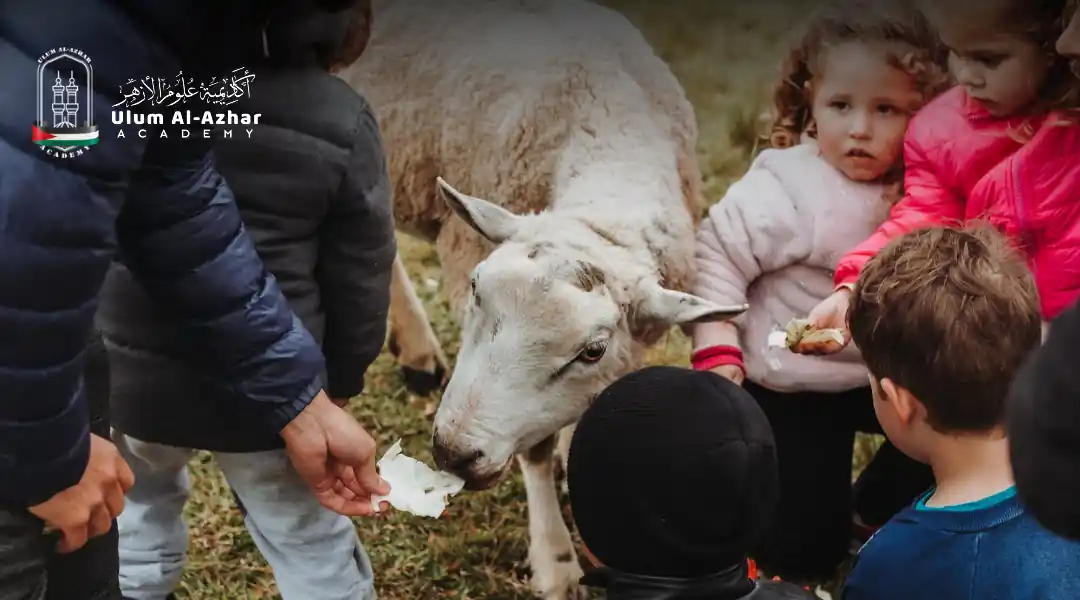
Preparing for Qurbani
1. Understanding the Meaning of Qurbani
Qurbani, also called Udhiyah, commemorates the willingness of Prophet Ibrahim عليه السلام to obey Allah completely. Allah replaced the sacrifice with a ram, making it a lasting symbol of devotion and submission.
2. Choosing the Animal Properly
When learning what to do on Eid Al Adha, preparing for Qurbani correctly is essential.The sacrificial animal should:
- Be One of the livestock : Sheep,Goats,Cows,Camels
- Be healthy
- Reach the required age
- Be free from major defects
- Be treated kindly and respectfull
3. Performing the Sacrifice
The time for offering the Qurbani begins after the Eid prayer and continues until before sunset on the last of the Days of Tashreeq. Important etiquettes include:
- Mentioning the name of Allah
- Using a sharp tool to reduce suffering
- Avoiding cruelty or harshness
- Facing the Qiblah if possible
4.Distributing the Meat
One of the most beautiful parts of what to do on Eid Al Adha is sharing food and helping others. The scholars have stated that it is preferable to divide it into three parts: one-third to eat, one-third to give in charity, and one-third to keep.
Family and Community Traditions
Visiting Relatives
Among the great wisdoms and benefits of what to do on Eid Al Adha are strengthening the bonds between Muslims, exchanging visits, bringing hearts closer together, removing feelings of loneliness, and extinguishing hatred, grudges, and envy.
A believer takes advantage of the days of Eid by visiting relatives, family members, neighbors, and friends, seeking the pleasure of Allah Almighty. Anas رضي الله عنه reported that the Messenger of Allah ﷺ said:
“Whoever would love for his provision to be expanded and his lifespan to be blessed, let him maintain the ties of kinship.”
Helping the Poor and Needy
It is recommended for the one offering the sacrifice to eat from his Qurbani, give some of it as gifts to relatives, and donate some to the poor. The Messenger of Allah ﷺ said: “Eat from it, feed others, and store some of it.”
Teaching Children the Meaning of Eid
Children should learn that Eid is more than new clothes and celebrations. Parents can teach them: The story of Prophet Ibrahim, the meaning of sacrifice, islamic date and Hajj ,Gratitude to Allah and Charity and kindness
Avoiding Excess and Wastefulness
While Eid is a celebration, Islam teaches moderation in all matters. Muslims should avoid:
- Extravagant spending
- Food waste
- Pride and showing off
- Backbiting and gossiping.
- Neglecting prayers

Spiritual Reflection on Eid
Remembering the Lessons of Prophet Ibrahim
Qurbani was legislated by Allah to revive the memory of Prophet Ibrahim and to bring ease and joy to people on the day of Eid, as the Messenger of Allah ﷺ said:
“They are days of eating, drinking, and remembrance of Allah, the Mighty and Majestic.”
Increasing Worship During Eid Days
The Days of Tashreeq are days of remembrance, gratitude, and worship.
Recommended acts include: Reciting Takbeer, Performing prayers on time, Reading Quran, Making Dua, Giving charity, Remembering Allah frequently
Showing happiness and joy on Eid is from the Sunnah.
Among the traditions of Eid mentioned in the Sunnah is playing the duff (a hand drum) on Eid days, along with permissible forms of recreation and joyful entertainment. In Sahih al-Bukhari, Aisha رضي الله عنها narrated:
“Abu Bakr رضي الله عنه entered while two young girls were with me during the days of Mina, beating the duff, while the Prophet ﷺ was covered with his garment. Abu Bakr rebuked them, but the Prophet ﷺ uncovered his face and said: ‘Leave them, O Abu Bakr, for these are days of Eid, and these are the days of Mina.’”
Aisha رضي الله عنها also said:
“I saw the Prophet ﷺ screening me while I watched the Abyssinians playing in the mosque. Umar رضي الله عنه rebuked them, but the Prophet ﷺ said: ‘Leave them, O Banu Arfidah, safely.’ Meaning: continue in peace and security.”
Seerah of Prophet Muhammad: Get to know our role model: Prophet Muhammad by studying his life, character, attributes, and teaching style.
Conclusion
Imagine being rewarded simply for enjoying yourself, eating, celebrating, wearing your finest clothes, and expressing happiness! Yes, this is what our tolerant and easy religion has taught us.
Eid Al Adha is a time of joy and happiness in gratitude for the completion of one of the greatest pillars of Islam — the pilgrimage to the Sacred House of Allah. Muslims truly have the right to rejoice and thank Allah for His blessings, as Allah the Almighty says:
“Say, ‘In the bounty of Allah and in His mercy — in that let them rejoice; it is better than all that they accumulate.’” [Yunus: 58]
Learning what to do on Eid Al Adha helps Muslims celebrate this sacred occasion with proper understanding and sincerity
Seize the opportunity for personalized Islamic learning with a free consultation from Egyptian Al-Azhar Sheikhs.
FAQs
What to do on Eid Al Adha first thing in the morning?
A Muslim wear clean clothes, recite Takbeer, and prepare to attend the Eid prayer.
Is Qurbani obligatory for every Muslim?
Qurbani is highly emphasized for financially capable Muslims.
Can women attend Eid prayer?
Yes, women are encouraged to attend the Eid prayer while observing modesty and Islamic etiquette.
How long does Eid Al Adha last?
Eid Al Adha begins on the 10th of Dhul Hijjah and continues through the Days of Tashreeq, ending on the 13th of Dhul Hijjah.
