
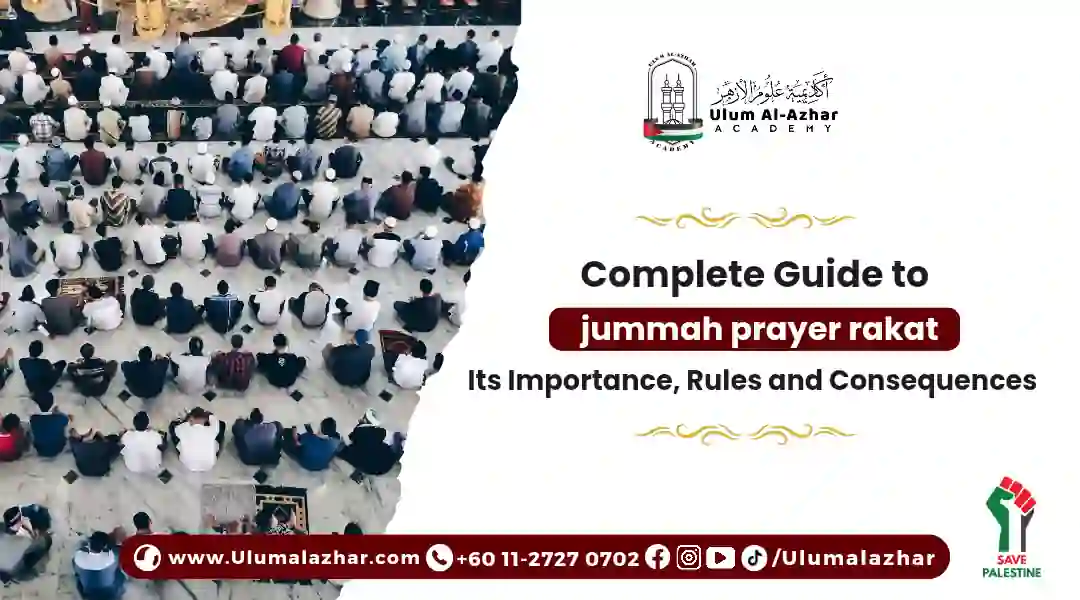
Complete Guide to jummah prayer rakat and Its Importance
Table of Contents
Friday is the best of days in Islam, as evidenced by the saying of the Prophet ﷺ: ‘The best day on which the sun rises is Friday. On it Adam was created, on it he was admitted into Paradise, on it he was expelled from it, and the Hour will not be established except on a Friday.’”
This day Allah has honored with special acts of worship, unique virtues, and a powerful weekly gathering of the Muslim community. The Jummah prayer holds a central place on this day. This guide explores how to perform jummah prayer rakat, its etiquettes, common mistakes and its spiritual rewards is essential for every Muslim who seeks closeness to Allah.
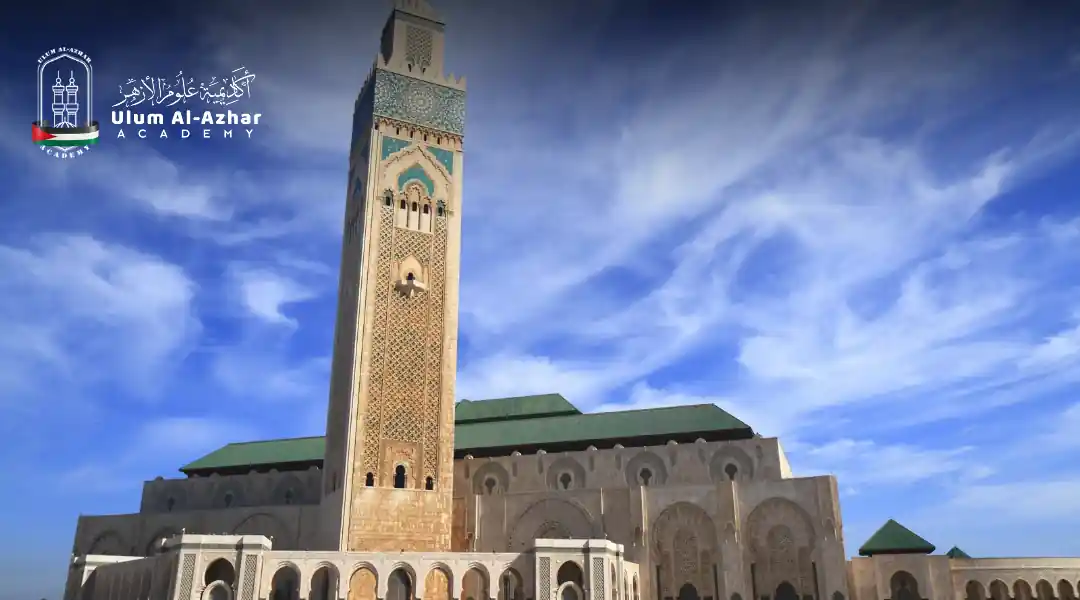
Understanding the Number of jummah prayer rakat
One of the most common questions Muslims ask is: How many rak‘āt should be prayed during the Friday prayer?
– Jummah prayer is an obligation upon men, and they must perform it in the mosque in congregation. The Jummah prayer rakat consists of two rak‘ahs in which the imam recites aloud, and it must be preceded by two sermons.
– Jummah prayer is not obligatory for women. If a woman prays at home, she performs it as the regular ẓuhr prayer. But if she attends the mosque with the men, she performs the Friday prayer as two rakʿahs, and that suffices her in place of the ẓuhr prayer.
– As for the Sunnah of the Friday prayer:
- There is no confirmed Sunnah prayer before it; rather, its Sunnah is after the prayer.
If you see some Muslims praying before Jumuʿah, they are not intending a pre-Jumuʿah Sunnah, but are simply performing general voluntary prayers, as it is allowed on Friday to pray as many voluntary rakʿahs as one wishes before the Friday prayer. - As for the number of Sunnah rakʿahs after Jumuʿah, the minimum is two, and the more complete practice is four.
Discover personalized Islamic learning: begin with a free consultation by Al-Azhar-certified Sheikhs from Egypt.
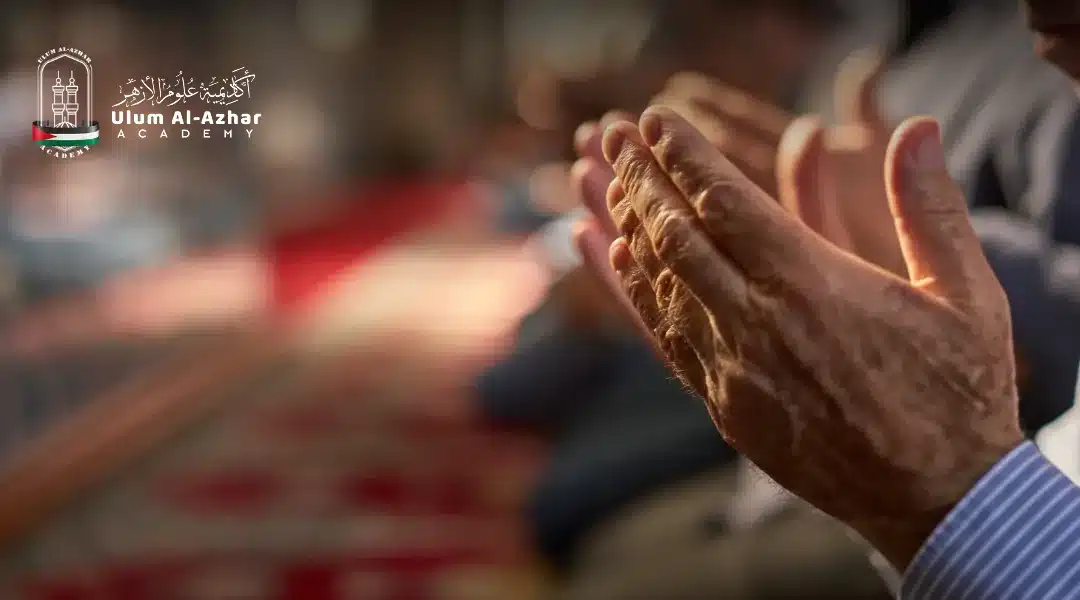
Spiritual Importance of Attending Friday Prayer
Among the blessings of Allah upon us is that the virtues of Friday extend to the entire day—both before the Jummah prayer rakat and after it. We find no evidence in the Sharīʿah that restricts its virtue to a specific time, except for the hour in which supplications are answered, and the stronger opinion is that it is the last hour of the day before sunset.
The night of Friday also shares in this virtue, meaning that the blessings of Friday begin from after sunset on Thursday until sunset on Friday.
Learn Shariah through the method of Talaqqi Kitab Turath (Traditional Study) and get certificates endorsed by scholars from AL Azhar (Ijazah Sanad).
The virtue of the Friday prayer (jummah prayer rakat) is mentioned in several narrations:
– The Prophet ﷺ said:
‘Whoever bathes on Friday, then goes to the prayer and prays what is easy for him, then listens attentively until the imam finishes his sermon, then prays with him, will have his sins forgiven between that Friday and the next, plus an additional three days. And whoever touches the pebbles has engaged in idle behavior.’
(Narrated by Muslim)
– Abu Hurayrah رضي الله عنه reported that the Messenger of Allah ﷺ said:
‘The five daily prayers, and from one Friday to the next, are an expiation for whatever occurs between them, so long as major sins are avoided.’
– Aws ibn Aws al-Thaqafī رضي الله عنه reported that the Messenger of Allah ﷺ said:
‘Whoever bathes on Friday and causes others to bathe, comes early and arrives before others, draws near and listens attentively, will have for every step he takes the reward of a year—its fasting and its praying.’ Narrated by al-Tirmidhī
Common Mistakes During jummah prayer rakat
The Prophet ﷺ said:
“No man bathes on Friday, purifies himself as much as he can, applies some of his oil or touches some perfume from his home, then goes out without separating between two people, then prays what has been written for him, and listens attentively when the imam speaks—except that he will be forgiven for what is between that Friday and the next.” Narrated by al-Bukhārī.
Among the mistakes that some Muslims commit—which cause them to lose this great reward of jummah prayer rakat —are the following:
- Being preoccupied before the prayer with buying, selling, or shopping at the entrances of the mosque, and sometimes continuing to do so even after the second call to Friday prayer. This is prohibited by the explicit text of the Qur’an.
- Parking in prohibited or harmful places, such as blocking the entrances of nearby homes or obstructing roads—something that may delay a sick person or worsen their condition.
- Bringing children under the age of seven.
- Reserving seats in the mosque.
- Sitting at the back after arriving early while there is space in the front rows—unless there is a valid excuse.
- Neglecting the two rak‘ahs of greeting the mosque (Tahiyyat al-Masjid) upon entering during the sermon.
- Delaying Tahiyyat al-Masjid for someone who enters during the adhān in order to repeat after the mu’adhdhin; the correct practice is to perform the greeting prayer immediately, because responding to the mu’adhdhin is Sunnah, while listening to the sermon is obligatory—and the obligatory takes precedence over the Sunnah.
- Stepping over people’s shoulders for those who arrive late, except when there is an open space in the front.
- Reciting the Qur’an aloud before the sermon in a way that disturbs others.
- Talking during the sermon or being distracted by phones and similar devices.
- Rushing aggressively toward the front rows once the prayer is established, thereby inconveniencing those already seated—except if there is genuinely available space.
- Praying outside the mosque while there is space inside, even though the rows are required to be connected.
- Completing only two rak‘ahs for someone who misses the second bowing (rukūʿ) of the Friday prayer; the correct ruling is that he must complete four rak‘ahs as ẓuhr, because Friday prayer is invalidated by missing the second rukūʿ.
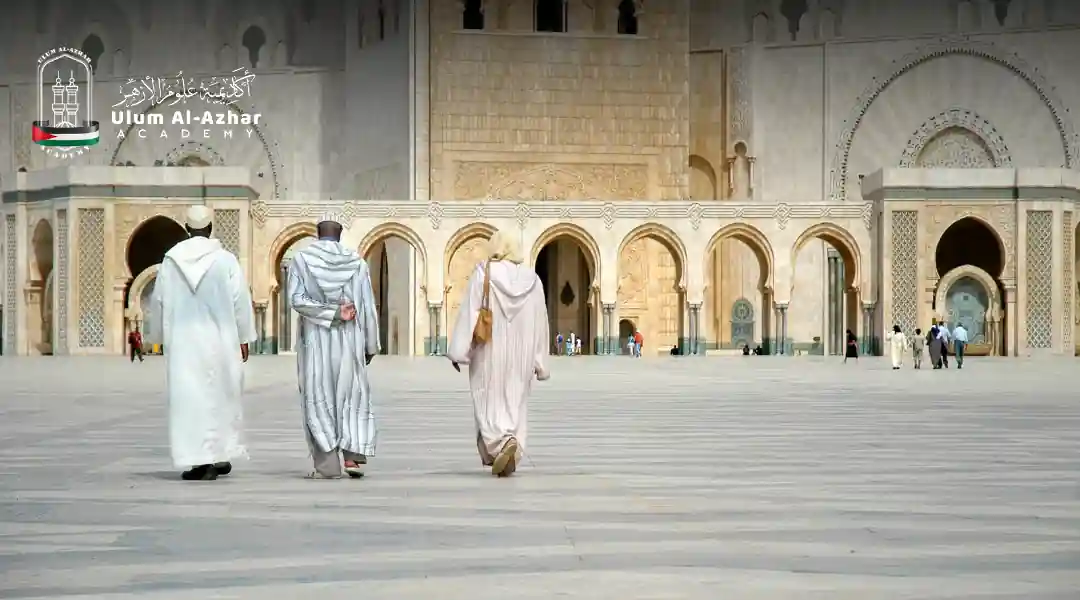
How to Maximize the Blessings of Friday Prayer
Friday is a treasure chest of opportunities, and a believer should approach it with a heart ready to receive mercy.
- Performing ghusl (ritual bathing) on Friday, trimming my nails, applying perfume, and wearing clean clothes after making wudu.
- Do not eat garlic or onions, and do not smoke. Clean your mouth with siwak or toothpaste.
- Pray two rak‘ahs upon entering the mosque, even if the khateeb is already on the minbar, following the command of the Prophet ﷺ who said:
“If one of you comes to Friday prayer while the imam is delivering the sermon, pray two rak‘ahs and make them brief.” (The intention is the “Tahiyyat al-Masjid” prayer.) [Agreed upon]
- Sit and listen to the sermon from the imam and do not speak.
- Pray the two obligatory jummah prayer rakat with the imam, with your intention set in the heart.
- Pray four rak‘ahs of the Sunnah after Jumu‘ah, or two rak‘ahs at home — and that is better.
- Increase sending blessings upon the Prophet ﷺ on this day more than on other days.
- Seek the special hour for du‘a on Friday, as the Prophet ﷺ said:
“Indeed, on Friday there is an hour during which no Muslim asks Allah for something good except that He grants it to him.” [Agreed upon]
- It is recommended for a Muslim to recite Surah Al-Kahf on Friday, as the Prophet ﷺ said:
“Whoever recites Surah Al-Kahf on Friday, a light will shine for him between the two Fridays.”
And he ﷺ also said:
“Whoever recites Surah Al-Kahf on Friday, a light will shine for him between him and the Ancient House (the Ka‘bah).”
Seerah of Prophet Muhammad: Get to know our role model: Prophet Muhammad by studying his life, character, attributes, and teaching style.
Guidance from Ulum Al-Azhar Academy on jummah prayer rakat
The “Purification and Prayer” course provides a comprehensive guide to the essential practices of Taharah and Salah, including Wudu, Ghusl, and Tayammum. As well as the rules for leading prayers, special prayers, and funeral rites. When discussing jummah prayer rakat, scholars emphasize:
1. The Structure of the Prayer.
2. Importance of Early Attendance
3. Balancing Ritual and Spirituality
4. Commitment to Community
Conclusion
The Friday prayer is one of the greatest weekly acts of worship in Islam. Understanding the correct jummah prayer rakat, respecting the khutbah, and approaching the day with reflection strengthens the heart and deepens one’s connection to Allah.
Whether through Sunnah prayers, acts of charity, Qur’an recitation, or even daily moments of gratitude. Friday is a divine gift, a weekly moment when hearts are refreshed, sins are forgiven, and the community gathers in unity.
Initiate your bespoke Islamic learning experience with a free consultation, guided by Al-Azhar-certified Sheikhs from Egypt.
FAQs
How many rak‘āt are in the Jummah prayer?
The actual jummah prayer rakat is two rak‘āt performed after the khutbah.
Are the Sunnah prayers before Jummah obligatory?
They are not obligatory, but strongly recommended. Most Muslims pray between two and eight rak‘āt before the khutbah.
How many Sunnah rak‘āt should I pray after Jummah?
You may pray two or four Sunnah rak‘āt—both opinions are valid.
Can I pray Dhuhr instead of Jummah?
Only those with a legitimate excuse like illness may pray Dhuhr instead. Otherwise, attending Jummah is obligatory for adult men.
