
End of Ramadan Celebrations: Meaning of Eid and How Muslims Celebrate
Table of Contents
Eids in Islam are considered an essential part of Muslim life. Muslim celebrations represent significant moments in the Islamic calendar and embody important religious and moral values. They also provide Muslims with an opportunity to draw closer to Allah and strengthen social bonds.
The word Eid refers to a recurring occasion or season. It is a term used for a gathering that returns regularly, such as one that recurs annually, monthly, weekly, or in a similar pattern.
Muslims have two Eids: Eid al-Fitr (the end of Ramadan celebrations) , which is the first day of the month of Shawwal, and Eid al-Adha, which is the tenth day of the month of Dhul-Hijjah. Muslims have no other Eid besides these two, except for Friday (Jumu‘ah), which is considered a weekly day of celebration.
The end of Ramadan celebrations remind Muslims all over the world as in Canada and many other countries that the true purpose of Ramadan is not only temporary discipline but the development of lasting faith, compassion, and good character.
Dive into Islamic learning; begin with free consultation, guided by Al-Azhar-certified Sheikhs based in Egypt.

Meaning Behind end of ramadan celebrations
Muslims celebrate Eid al-Fitr – which is end of Ramadan celebrations- on the first day of the month of Shawwal every year. It is the day that shines upon their hearts after a full month of fasting, night prayers, recitation of the Qur’an, and acts of kindness.
The end of Ramadan celebrations is called Eid al-Fitr, which literally means “the festival of breaking the fast.” because Muslims break their fast on that day after completing the fasting of the month of Ramadan, and because Allah, the Exalted, rewards them with great recompense for their fasting, patience and worship.
Ibn Abidin said: “It was called Eid because Allah grants recurring acts of generosity in it—that is, various forms of kindness that return to His servants on every such day.”
Muslims express thankfulness to God for giving them the strength to fast and the opportunity to seek forgiveness and spiritual growth. It is also a time to celebrate the mercy and generosity of God, who grants believers countless opportunities to renew their faith.
One important aspect of the end of Ramadan celebrations is charity. Before the Eid prayer, Muslims give a special form of charity known as Zakat al-Fitr. This charity ensures that those in need can also participate in the joy of Eid and have enough food for the day. The emphasis on giving reminds Muslims that faith is closely connected with compassion and social responsibility.
Traditions Muslims Follow After Ramadan
The end of Ramadan celebrations highlight unity within the Muslim community. Regardless of background, nationality, or economic status, Muslims gather together to pray and celebrate. This shared experience strengthens bonds among believers and reinforces the idea that the community thrives through mutual support and kindness.
Eid al-Fitr celebrations are accompanied by a number of meaningful traditions practiced by Muslims worldwide. These traditions vary slightly between cultures, but they share common spiritual foundations.
In fact, they are not merely traditions; rather, they are rulings and etiquettes established in Islam to express joy and celebration. These include:
First: Rulings of Eid
- It is forbidden to fast on the day of Eid al-Fitr.
This is based on the hadith of Abu Sa‘id al-Khudri رضي الله عنه , who reported that the Messenger of Allah ﷺ forbade fasting on two days: the day of Eid al-Fitr and the day of Eid al-Adha. - The Eid Prayer.
Abu Sa‘id reported: The Messenger of Allah ﷺ would go out on the day of Eid al-Fitr and Eid al-Adha to the prayer ground, and the first thing he would begin with was the prayer. There are seven takbirs in the first rak‘ah and five in the second, and the recitation comes after them in both.
It was also narrated from Aisha رضي الله عنها that the takbirs in the Eid prayer are seven in the first rak‘ah and five in the second, apart from the takbirs of bowing (rukū‘).
Second: Etiquettes of Eid
- Performing ghusl (ritual bathing).
It was reported that Abdullah ibn Umar رضي الله عنه used to perform ghusl on the day of Eid al-Fitr before going to the prayer ground. It is also authentically reported from Sa‘id ibn Jubayr رضي الله عنه that he said:
“The Sunnah of Eid includes three things: walking to the prayer, performing ghusl, and eating before going out.” - Eating before going out for the prayer.
One of the etiquettes of Eid al-Fitr is not to go out to the prayer until one has eaten some dates. Al-Bukhari narrated from Anas ibn Malik رضي الله عنه that he said:
The Messenger of Allah ﷺ would not go out on the morning of Eid al-Fitr until he had eaten some dates, and he would eat them in an odd number. - Saying the Takbir on the day of Eid.
Declaring the greatness of Allah (Takbir) is one of the great Sunnahs of Eid. Allah says:
“And that you complete the prescribed period and glorify Allah for having guided you, so that you may be grateful.” (Qur’an 2:185) - Exchanging greetings.
Among the etiquettes of Eid is exchanging kind greetings between people, regardless of the exact wording, such as saying: “May Allah accept from us and from you,” or “Blessed Eid,” and other permissible expressions of congratulations.
It was reported from Jubayr ibn Nufayr رضي الله عنه that when the companions of the Prophet ﷺ met one another on the day of Eid, they would say:
“Taqabbal Allahu minna wa minkum” (May Allah accept from us and from you).
- Taking one route to the prayer and returning by another.
It was narrated from Jabir ibn Abdullah رضي الله عنهما that the Prophet ﷺ used to take a different route when returning on the day of Eid than the one he took when going to the prayer. - Adorning oneself for Eid.
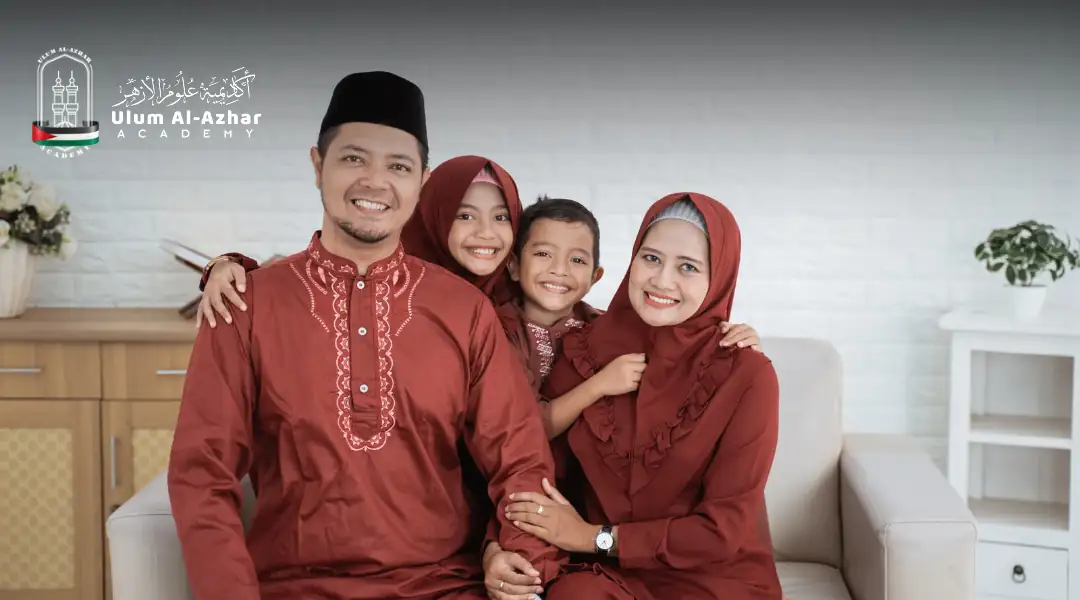
It is recommended to beautify oneself for the two Eids by wearing the best available clothes, while women observe the guidelines of modest Islamic dress.
Food plays an important role in the end of Ramadan celebrations as well. After a month of fasting, families prepare special meals and sweets to share with loved ones and guests. However, the emphasis remains on moderation and gratitude rather than extravagance.
Visiting relatives, especially elders, is another valued tradition. These visits help maintain family ties and spread happiness throughout the community.
Spiritual Reflection After a Month of Fasting
Although the end of Ramadan celebrations are joyful, they are also a time for reflection. Ramadan is meant to transform a person spiritually, and Eid provides an opportunity to evaluate how that transformation will continue throughout the year.
Many believers reflect on questions such as:
- Did the month bring them closer to God?
- Did they become more patient and compassionate?
- Are they committed to maintaining regular prayer and good deeds?
One of the greatest rituals of Eid al-Fitr is Zakat al-Fitr, which was made obligatory by the Messenger of Allah ﷺ as a purification for the fasting person from idle talk and improper speech, and as nourishment for the poor.
It was narrated from Ibn Abbas رضي الله عنه who said:
“The Messenger of Allah ﷺ prescribed Zakat al-Fitr as a purification for the fasting person from idle talk and obscene speech, and as food for the poor. Whoever gives it before the Eid prayer, it is accepted as Zakat, and whoever gives it after the prayer, it is merely a charity among charities.”
The spiritual dimension of the end of Ramadan celebrations encourages Muslims to carry forward the habits they developed during Ramadan. Acts of charit, regular recitation of the Qur’an, and kindness toward others should continue beyond the month of fasting.
Community Gatherings and Eid Preparations
On a joyful day in the city of Madinah, on the morning of Eid, the Prophetic household and its surroundings witnessed scenes of end of Ramadan celebrations with the knowledge and approval of the Messenger of Allah ﷺ.
Aisha, the Mother of the Believers رضي الله عنها, said:
“The Messenger of Allah ﷺ entered upon me while two young girls were with me singing songs of the Day of Bu‘ath. He lay down on the bed and turned his face away. Then Abu Bakr entered and rebuked me, saying: ‘The musical instruments of Satan in the presence of the Prophet ﷺ?’ The Messenger of Allah ﷺ turned to him and said: ‘Leave them.’ When he became distracted, I signaled to them and they left.” (Narrated by Al-Bukhari)
In another narration, the Prophet ﷺ said:
“O Abu Bakr, every people have a festival, and this is our festival.”
In a narration reported by Ahmad, he said:
“So that the Jews may know that there is ease and openness in our religion.”
Not far from the blessed chamber, there was another celebration described by Aisha رضي الله عنها, continuing the context of her narration. She said:
“It was the day of Eid, and the Abyssinians were playing with shields and spears. Either I asked the Messenger of Allah ﷺ, or he asked me: ‘Would you like to watch?’ I said: ‘Yes.’ So he stood me behind him, my cheek against his cheek, while he said: ‘Carry on, O Banu Arfidah!’ Until I became tired. Then he said: ‘Is that enough for you?’ I said: ‘Yes.’ He said: ‘Then go.’”
Showing happiness during the days of Eid through permissible enjoyment and relaxation is one of the symbols of the religion. However, this joy remains guided by the principles of the Sharia; it should not turn into extravagance, wastefulness, sin, or wrongdoing.
Among the forms of deviation in end of Ramadan celebrations are:
Extravagance and wastefulness: in food, drink, and clothing. Allah has forbidden this, saying:
“Eat and drink, but do not be excessive. Indeed, He does not love those who commit excess.” (Qur’an 7:31)
Firecrackers and fireworks: which can cause harm and disturbance, and involve wasting money and disturbing others.
Loud music and immoral songs: which contradict the spiritual purity and dignity of Eid.
Unlawful mixing: between unrelated men and women.
The true Eid is the one celebrated for the sake of Allah and in obedience to Him. The real joy of Eid is the joy that flows from a believing heart, grateful to Allah for His guidance.

How Muslim Communities Celebrate Eid in Canada
Muslim communities in Canada celebrate the end of Ramadan celebrations in ways that beautifully blend Islamic traditions with the multicultural environment of the country.
Mosques and Islamic centers across cities such as Toronto, Vancouver, and Montreal organize large Eid prayers attended by thousands of worshippers. These gatherings highlight the diversity of the Muslim population in Canada, where people from many cultural backgrounds come together to celebrate.
Public parks, convention centers, and community halls are often used to accommodate the large crowds during the end of Ramadan celebrations. Families arrive early in the morning dressed in their best clothes, greeting one another with smiles and warm wishes.
After the prayer, many families gather for festive meals featuring dishes from different parts of the world. It is common for communities to organize Eid festivals that include food stalls, cultural performances, and activities for children.
Learn & practice the language of Quran with qualified Arab tutors from Al-Azhar Al-Sharif, Egypt in Online Quranic Arabic Course.
Conclusion
Blessed Eid al-Fitr at the end of Ramadan celebrations is the day of the divine reward for those who fasted and the joy of the worshippers after a month of obedience and devotion. It is a day in which the grace and mercy of Allah become manifest for His servants, as He forgives them, accepts their fasting, and grants them reward and recompense.
On this great day, we feel the meaning of unity and solidarity when we all gather in the prayer ground, greet one another, exchange congratulations, visit relatives, and strengthen our bonds with one another. We also experience the meanings of compassion and generosity when we give Zakat al-Fitr to the poor and needy so that they may share in the joy with us.
Eid is not merely a day of amusement and play; rather, it is a great spiritual school in which we learn the meanings of gratitude, rejoicing in Allah’s blessings, righteousness, and piety. It is also a reminder of maintaining family ties and bringing happiness to the hearts of others.
In conclusion, we say as the noble companions used to say: “May Allah accept from us and from you.” May every year find you closer to Allah, more joyful in His obedience, and more committed to following the Sunnah of His Prophet.
Blessed Eid to you. May Allah accept your fasting and prayers, and may He return these days to you with goodness, blessings, and prosperity.
The next step in your Islamic learning journey is here: free consultation with Al-Azhar-certified Sheikhs from Egypt.
FAQs
What are the end of Ramadan celebrations called?
The end of Ramadan celebrations are known as Eid al-Fitr, a festival that marks the completion of the fasting month and brings Muslims together in prayer and celebration.
Why do Muslims celebrate Eid after Ramadan?
Muslims celebrate Eid to thank God for the ability to complete the month of fasting and to express joy, gratitude, and unity with family and community.
What is the significance of charity during the end of Ramadan celebrations?
Before the Eid prayer, Muslims give a special charity called Zakat al-Fitr to ensure that those in need can also enjoy the end of Ramadan celebrations.
