
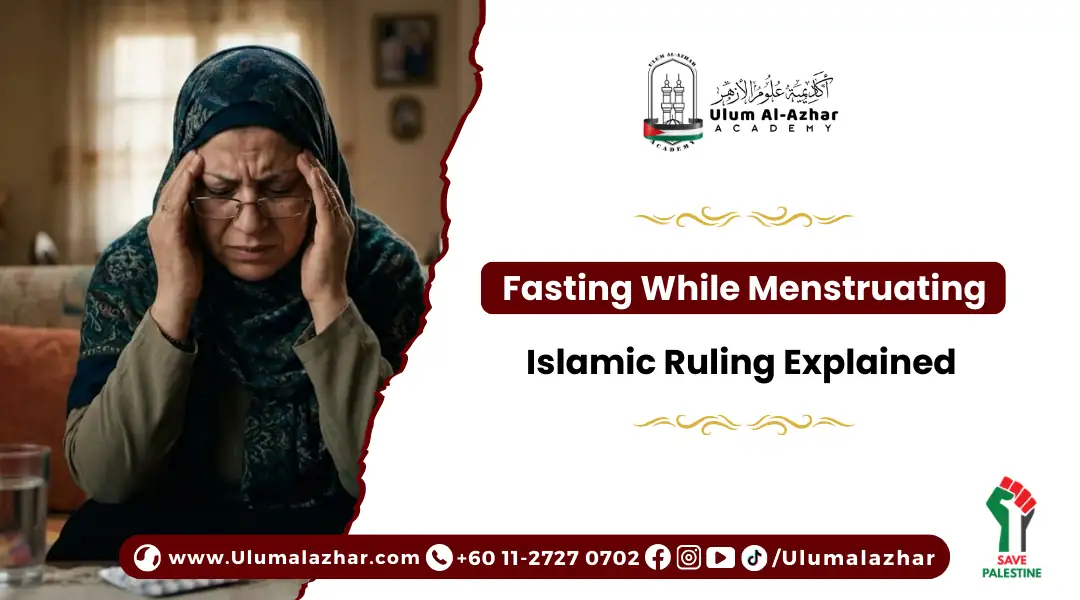
Fasting While Menstruating: Islamic Ruling Explained
Table of Contents
Fasting in Islam is a deeply spiritual act of worship that combines physical discipline with moral and spiritual refinement. During the blessed month of Ramadan, Muslims around the world – like in Canada and many other countries- observe fasting as an obligation prescribed by Islamic law.
A believer is firmly convinced and holds with absolute certainty that Allah the Exalted is All-Wise. He legislates nothing except for profound wisdom, commands nothing except what contains pure or prevailing benefit, and forbids nothing except what involves pure or prevailing harm.
Islamic teachings are also rooted in mercy, balance, and an accurate understanding of human nature. One of the most frequently asked questions in this context relates to fasting while menstruating, especially among women in Canada and many other countries who wish to maintain their spiritual connection during Ramadan.
We will provide a clear and balanced explanation of the Islamic ruling on fasting while menstruating, addressing the wisdom behind the exemption, the obligation of making up missed fasts, and the emotional and spiritual dimensions of this issue.
Understanding Periods and Fasting in Ramadan
Menstruation is a natural biological process experienced by women. When a woman reaches puberty, this blood usually flows from her every month at known times, which may last six or seven days, or less or more, depending on her personal cycle. It is often accompanied by some pain, especially at its beginning.
Islamic law acknowledges this reality with clarity and respect. From an Islamic perspective, physical states that involve hardship or harm are taken into serious consideration when assigning religious obligations.
During Ramadan, fasting involves abstaining from food, drink, and marital relations from dawn to sunset. However, fasting while menstruating is not permitted according to well-established Islamic rulings. This prohibition is not a cultural norm or social practice, but a religious ruling grounded in authentic prophetic teachings and scholarly consensus.
Menstruation places a woman in a specific physical condition where fasting could cause harm or excessive difficulty. Islamic law does not seek to burden individuals beyond their capacity.
Therefore, a menstruating woman is prohibited from fasting during her period and is not sinful for leaving the fast. Rather, her abstention from fasting is an act of obedience to Allah and compliance with His command. It is important to emphasize that this ruling applies only to fasting and prayer and does not prevent her from engaging in other righteous deeds and acts of worship.
Curate your Islamic learning journey: schedule a free consultation with Al-Azhar-certified Sheikhs from Egypt.
Why Women Are Exempt From Fasting During Menstruation
A believer must submit to the ruling of Allah the Exalted and comply with it, even if the wisdom behind it is not known in this worldly life. It is sufficient for him that it is the command of Allah and His Messenger. Allah the Exalted says:
“The only response of the believers, when they are called to Allah and His Messenger to judge between them, is that they say, ‘We hear and we obey.’ And those are the successful.” (An-nur 51)
The wisdom behind Allah the Exalted forbidding a woman fasting while menstruating is rooted in mercy. The flow of blood weakens her body, and if she were to fast while menstruating, two causes of weakness would combine: the weakness from menstruation and the weakness from fasting. In that case, fasting would go beyond moderation and could reach the level of harm.
Islamic laws do not ignore the physical and emotional effects of menstruation, which may include fatigue, pain, dizziness, or weakness. Fasting during such a time could intensify these symptoms and cause harm.
Islamic jurisprudence operates on foundational principles, one of which is the removal of hardship. Acts of worship are meant to elevate the believer, not cause physical or emotional damage. Thus, fasting while menstruating is prohibited not as a restriction, but as a protective and compassionate ruling that preserves health and dignity.
Making Up Missed Fasts After Ramadan
Although women are exempt from fasting while menstruating during Ramadan, a menstruating woman is required to make up the days she missed of fasting in Ramadan ,after ramadan, by consensus of the scholars, based on the statement of ʿĀ’ishah رضي الله عنها:
“We used to menstruate at the time of the Messenger of Allah ﷺ, and we were commanded to make up the fasts, but we were not commanded to make up the prayers.”
Women are required to make up only the missed fasts, not the missed prayers. This distinction itself demonstrates mercy and ease, as making up prayers for several days or weeks would be overly burdensome.
There is flexibility regarding when these missed fasts can be made up. They may be completed at any time before the next Ramadan, allowing women to choose days that suit their health.
Understanding this balance helps remove guilt and anxiety often associated with fasting while menstruating, replacing it with confidence and peace of mind.
Learn Shariah through the method of Talaqqi Kitab Turath (Traditional Study) and get certificates endorsed by scholars from AL Azhar (Ijazah Sanad).
Emotional and Spiritual Support for Women
Many women experience emotional difficulty during Ramadan when they are unable to fasting while menstruating. Feelings of sadness, exclusion, or spiritual inadequacy are common, especially when family members are fasting together.
Islamic law came with justice in all matters. Excessiveness in acts of worship is a form of injustice that the Lawgiver has forbidden, and He has commanded moderation in worship. For this reason, Islam instructs hastening the breaking of the fast, delaying the pre-dawn meal (suḥūr), and forbids continuous fasting without breaking the fast. Justice and balance in acts of worship are among the greatest objectives of the Lawgiver. Thus, Allah the Exalted says:
“O you who believe, do not forbid the good things that Allah has made lawful for you, and do not transgress. Indeed, Allah does not love the transgressors.”
Breaking fasting while menstruating is among what Allah has made lawful. Rather, the scholars have unanimously agreed that fasting is prohibited for a menstruating woman, that she is required to make up the days she did not fast, and they have also agreed that if she were to fast, her fast would not be valid.
Therefore, there is no reason for her to feel guilt. Rather, her acceptance of Allah’s command and obedience to Him is what she is rewarded for. Fasting and prayer are the only acts of worship prohibited for her during these days, while she is free to engage in many other acts of worship, such as reciting the Qur’an, remembering Allah, feeding others, and much more.
By reframing the concept of fasting while menstruating within a broader spiritual context, women can maintain a deep and meaningful connection to Ramadan without feeling marginalized.

Common Misunderstandings About Menstruation and Fasting
Several misconceptions surround fasting while menstruating, often leading to confusion or unnecessary guilt.
– One common misunderstanding is the belief that a woman is spiritually “less” during menstruation. This idea has no basis in authentic Islamic teachings. Menstruation affects specific acts of worship but does not reduce faith, honor, or spiritual status.
– Another misconception is that women should attempt to fast despite menstruation if they feel physically capable. This is incorrect. Even if a woman feels well, fasting while menstruating is not allowed and does not count as a valid fast.
– One of the greatest misconceptions is the belief held by some that a menstruating woman is impure, a notion that Islam has categorically rejected. Rather, this belief stems from Jewish traditions, and there is abundant evidence refuting it in Islam.
The Prophet ﷺ said: “Glory be to Allah! Indeed, a Muslim — and in another narration, a believer — does not become impure.”
It is also authentically reported that the Prophet ﷺ would recline in the lap of ʿĀ’ishah رضي الله عنها while she was menstruating and recite the Qur’an. (Agreed upon)
It is also narrated from ʿĀ’ishah رضي الله عنها that she said:
“I would drink while I was menstruating, then hand the cup to the Prophet ﷺ, and he would place his mouth on the same spot where mine had been and drink. I would also eat meat from a bone while menstruating, then hand it to the Prophet ﷺ, and he would place his mouth where mine had been.”
The Prophet ﷺ also said to ʿĀ’ishah رضي الله عنها : “Hand me the prayer mat from the mosque.” She said, “I am menstruating.” He replied, “Your menstruation is not in your hand.”
As for the Jews, they used to regard a menstruating woman as impure and would not live with her in the same house. Anas رضي الله عنه said:
“Indeed, the Jews would not sit with a menstruating woman in the house, nor would they eat or drink with her…”
– Some also believe that missing fasts during menstruation requires additional compensation beyond making up the days. This is false. There is no expiation required, only the completion of the missed fasts at a later time.
Correcting these misunderstandings about fasting while menstruating is essential for fostering a healthy and informed relationship with religious practice.
Understanding the essential aspects of Islamic purification (Taharah) and prayer practices under the supervision of qualified teachers from Al-Azhar Al-Shariff, Egypt.
Conclusion
The ruling on fasting while menstruating reflects the core values of Islamic law: mercy, wisdom, and balance. Women are exempt from fasting during menstruation not because of deficiency, but because of care and consideration for their well-being.
This exemption does not diminish a woman’s spirituality or reward. On the contrary, obedience lies in following divine guidance with trust and acceptance. Making up missed fasts later preserves fairness while maintaining ease and flexibility.
Seize the opportunity for personalized Islamic learning with a free consultation from Egyptian Al-Azhar Sheikhs.
FAQs
Is fasting while menstruating ever allowed in Islam?
No, fasting while menstruating is not permitted and does not count as a valid fast.
Does a woman earn a reward for breaking fasting while menstruating?
Yes, because of accepting the ruling by God.
Can missed fasts be delayed for several months?
Yes, as long as they are completed before the next Ramadan.
Is menstruation considered sinful or impure in a spiritual sense?
No, menstruation is a natural condition and carries no moral or spiritual blame.
