

Why Muslims Read the Quran During Ramadan
Table of Contents
It is from Allah’s wisdom, mercy, and gentleness toward His servants that He has prepared for them special seasons of worship in which their hearts open to performing good deeds, making the most of their time, and striving in acts of obedience. He has promised them immense reward for doing so. “And your Lord creates what He wills and chooses” (Al-Qasas: 68).
Thus, He choose from among humanity Muhammad ﷺ; from among places, Makkah and Madinah—may Allah ennoble and honor them; from among days, the Jumma’h day; from among nights, Laylat al-Qadr, which is better than a thousand months; and from among months, the month of Ramadan, in which the Qur’an was revealed.
Allah has placed in the hearts of His believing servants a deep longing for this noble month. No sooner does the year turn and complete its cycle than those hearts begin to flutter in anticipation of its arrival. One of the most visible and cherished practices in this sacred month is the commitment to read the Quran during Ramadan.
But why is this practice so central? Why do Muslims, in Canada and many other countries all over the world, place such extraordinary emphasis on recitation during these thirty days? The answer lies in that every letter carries reward, and during Ramadan, rewards are multiplied, and acts of devotion carry even greater spiritual weight.
Curate your Islamic learning journey: schedule a free consultation with Al-Azhar-certified Sheikhs from Egypt.
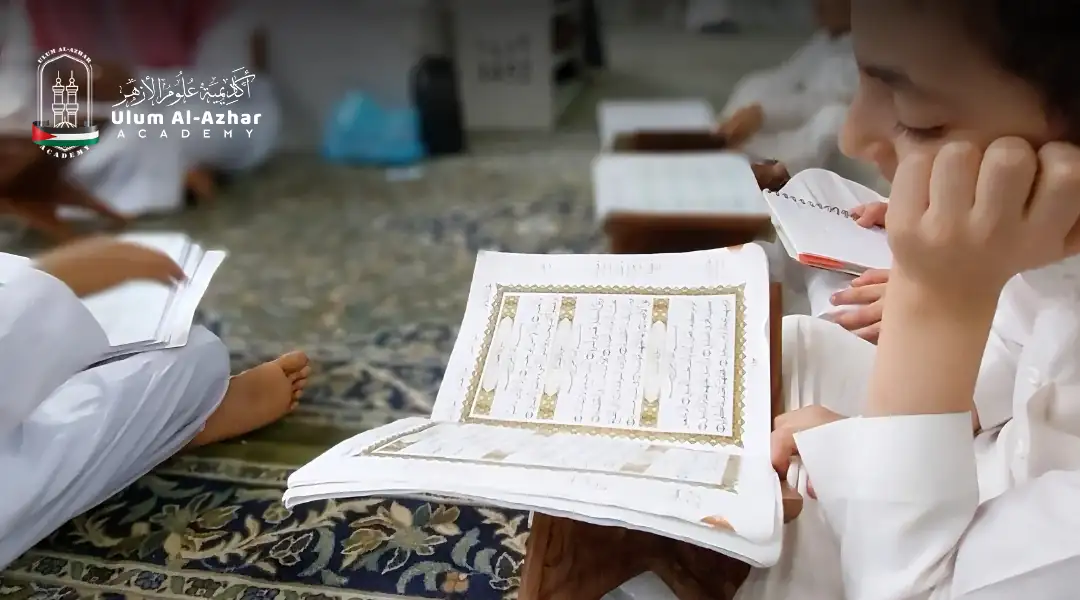
Why Muslims Read the Quran During Ramadan
Ramadan is described as the month of the Qur’an as it is the month in which the Qur’an was first revealed. It was during this blessed time that divine guidance descended upon the Prophet Muhammad ﷺ, beginning a revelation that would transform humanity. As Allah the Exalted says:
“The month of Ramadan is that in which the Qur’an was revealed, as guidance for mankind and clear proofs of guidance and criterion (between right and wrong).” (Al-Baqarah: 185)
and the Prophet ﷺ said:
“The Scrolls of Ibrahim were revealed on the first night of the month of Ramadan. The Torah was revealed after six days had passed of Ramadan. The Gospel was revealed after thirteen days of Ramadan had passed. And the Qur’an was revealed after twenty-four days of Ramadan had passed.” Narrated by Ahmad.
These preceding virtues answer the question of why Muslims are so keen to read the Quran during Ramadan.
Moreover, the Prophet ﷺ used to review the Qur’an with the Angel Jibril every Ramadan. Ibn ʿAbbas رضي الله عنه reported that the Messenger of Allah ﷺ was the most generous of people, and he was even more generous in Ramadan when Jibril would meet him. He would meet him every night to review the Qur’an together. Indeed, when Jibril met him, the Messenger of Allah ﷺ was more generous than the swiftly blowing wind.
Another reason is: fasting softens the heart. Hunger and thirst remind a person of dependence upon Allah. In this humbled state, the message of the Qur’an penetrates more effectively. The believer is more receptive to reminders about patience, gratitude, charity, and sincerity.
Additionally, Ramadan is a time of repentance. The Qur’an calls repeatedly for turning back to Allah with sincerity. By increasing recitation, believers seek forgiveness and moral reform. The month becomes an opportunity to realign life according to divine guidance.
Thus, Muslims read the Quran during Ramadan because it is the month of revelation, the season of multiplied reward, the time of repentance, and the opportunity for deep spiritual renewal.
Best Daily Quran Reading Schedule
When the noble month began, Imam Malik would set aside the study of hadith and gatherings with scholars, and devote himself entirely to reciting the Qur’an from the Mus-haf.
One of the most common goals in Ramadan is to complete the entire Qur’an at least once. To accomplish this, planning is essential. A balanced schedule ensures consistency without exhaustion.
The Qur’an contains 30 equal sections (ajza’). Reading one section (juz’) جزء per day allows completion in thirty days. The section (juz’) جزء is approximately 20 pages in the standard Madinah print.
A practical schedule to read the Quran during Ramadan might include:
- After Fajr prayer : 4–5 pages
- After Dhuhr prayer : 4–5 pages
- After Asr prayer : 4–5 pages
- After Maghrib or Isha: 4–5 pages
Dividing the reading across the five daily prayers makes the goal manageable. It also connects recitation to moments of worship throughout the day.
Some people prefer reading a portion before breaking their fast, as this is a time of heightened humility and supplication. Others find late-night reading particularly powerful, when distractions are minimal.

How to Complete the Quran in Ramadan
It is said in well-known proverbs: “The nobility of knowledge is determined by the nobility of that to which it is connected.” So how then when an act of worship is connected to the Magnificent Qur’an—the most noble and perfect of all books?
Allah has exalted its rank and established its authority with truth. It is the most eloquent of His Books in speech and the most perfect in composition:
“Indeed, it is a mighty Book. Falsehood cannot approach it from before it nor from behind it; it is a revelation from the Most Wise, the Most Praiseworthy.” (Fussilat: 41–42)
Completing the Qur’an in Ramadan is a noble objective, but it requires discipline and realistic planning to read the Quran during Ramadan you can:
– Set a clear intention. Intention transforms habit into worship. The purpose is not competition, but closeness to Allah.
– Determine a fixed daily quota. As mentioned, one juz’ per day is ideal for completing once. If someone begins late, they may increase their daily portion moderately rather than rushing excessively at the end.
– Reduce distractions. Limiting unnecessary screen time and entertainment frees up significant hours.
If a person struggles with Arabic fluency, as in Canada and many other countries, reading with translation alongside the original text can enhance comprehension. For beginners, even reading smaller portions consistently is valuable and rewarded as A’ishah رضي الله عنها reported that the Messenger of Allah ﷺ said:
“The one who recites the Qur’an proficiently will be with the noble and righteous scribes (angels). And the one who recites the Qur’an and stumbles in it, finding it difficult, will have two rewards.” Agreed upon.
Tips for Reading With Understanding
Shaykh al-Saʿdi, in his commentary on the verse {“that they may reflect upon its verses”}, said:
“This is the wisdom behind its revelation: that people may contemplate its verses, extract its knowledge, and reflect upon its secrets and wisdoms. Through deep reflection upon it, careful consideration of its meanings, and repeated thought—returning to them time after time—its blessings and goodness are attained. This indicates the encouragement to reflect upon the Qur’an, and that doing so is among the best of deeds. Indeed, recitation that includes reflection is superior to rapid reading through which this intended purpose is not achieved.”
Some practical steps that help in reflecting as you read the Quran during Ramadan:
- You must prepare yourself for contemplating the Qur’an. This is done by loving it, honoring it, and feeling your deep need for its guidance.
- Remain constantly connected to the Qur’an—through recitation, listening, and searching within it for answers to the questions that arise in your mind.
- Understand the meanings through books of tafsir, for reflection requires comprehension. It is recommended to combine two important commentaries in this regard: Al-Mukhtasar fi al-Tafsir (The Concise Commentary), which is widely available, and the tafsir of Shaykh al-Sa‘di, Taysir al-Karim al-Rahman fi Tafsir Kalam al-Rahman (The Facilitation of the Most
- Generous, the Most Merciful, in Explaining the Speech of the Most Merciful).
Seek help from books that assist you in recognizing some of the subtle insights and fine nuances found within the verses.
- Do not grow weary of repeating and revisiting the recitation time after time.
To achieve meaningful reflection during Ramadan:
– A reader may choose a specific theme and search for it throughout the Qur’an, or look for the Qur’an’s guidance regarding a particular issue or concern—he will find immense goodness.
– Alternatively, one may focus on deeply reflecting upon a single surah, understanding its meanings well, while continuing to recite the rest of the Qur’an more generally, and then pursue deeper reflection throughout the remainder of the year.
To read the Quran during Ramadan with understanding is to allow the Qur’an to address one’s personal reality. It is not a distant text; it speaks to contemporary hearts just as it spoke to the first believers.
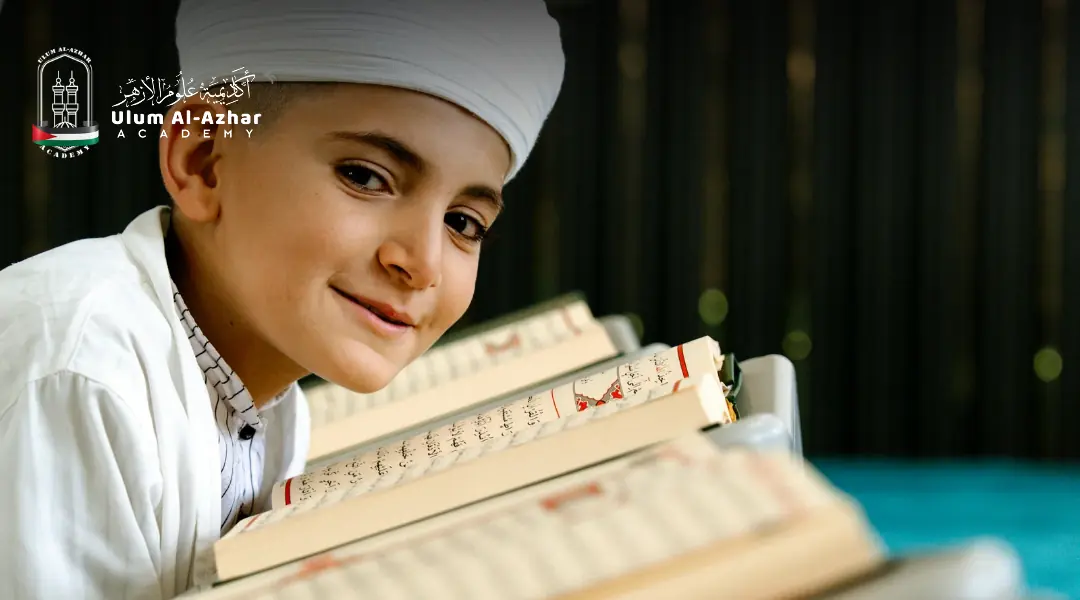
Balancing Quran Reading With Daily Duties
What is required of a Muslim is to combine the interests of this world and the Hereafter. He is neither one who abandons worldly life and neglects it under the pretext of focusing on the Hereafter, nor one who immerses himself entirely in worldly matters while turning away from the Hereafter.
Rather, the purpose of this worldly life is to take provisions from it for the Hereafter. For this world is not a permanent abode; it is merely a passage through which a person must inevitably move on to the Hereafter.
The wise and discerning believer is the one who prepares for that transition. For this reason, the Prophet ﷺ was asked, “Who are the most intelligent and most resolute of people?” He replied, “Those who remember death most often and are best prepared for it.”
Here are some steps that help in balancing daily responsibilities with read the Quran during Ramadan:
– A Muslim can set aside just one hour from his day to read a juz’ (one section) of the Qur’an. In fact, a juz’ can be read in about forty-five minutes, and with consistency and practice, a person may even read more than two ajza’ in an hour.
– Time that a Muslim spends on public transportation can also be used beneficially by reading from the Mus-haf or from the Qur’an on a mobile phone.
– Also, a specific daily reading time can also be designated—such as the period just before the Maghrib call to prayer. Many people spend this time merely waiting for the adhan. Instead of simply waiting, one can accomplish a substantial portion of Qur’an recitation during those minutes.
– In addition, read the Quran during Ramadan with family members, turning recitation into a shared activity.
– Avoid overcommitting socially during Ramadan to protect spiritual focus.
Explore the Depths of Quran Courses with Ulum Al-Azhar Academy
Conclusion
The Magnificent Qur’an is the Word of Allah—the Most Great, the Most Wise—through which He willed, in His glory, to bless this community of believers and to make it His gift to every believer across the span of time, the differences of place, and the succession of generations—a noble honor from Him to the nation of Muhammad ﷺ.
Yet, in His wisdom, Allah decreed that this Great Qur’an would have a special distinction within a particular time that He chose above all other times. The period Allah selected and granted unique distinction for the Qur’an, above all other seasons, is the month of Ramadan.
The special bond between the Qur’an and Ramadan began there—in the Cave of Hira. It began at the moment when the revelation of heaven met the people of the earth after a long interruption. It began at that unparalleled historical moment in all of human history—the moment when the prophethood of Muhammad ibn ʿAbdullah was proclaimed, the moment when the earth was honored by the recitation of Allah’s words upon it for the first time in many years.
Seize the opportunity for personalized Islamic learning with a free consultation from Egyptian Al-Azhar Sheikhs.
FAQs
1. Is it obligatory to complete the Qur’an in Ramadan?
No, it is not obligatory. Completing it is highly recommended and greatly rewarding, but what matters most is sincere and consistent engagement.
2. Can I read the Qur’an in my own language?
Reading the Arabic text carries the actual unique reward, but reading a translation for understanding is beneficial and encouraged.
3. What if I cannot read fluently?
You are still rewarded for your effort. Struggling readers receive additional reward for their perseverance.
4. Is listening to the Qur’an equal to reading it?
Listening is highly virtuous and beneficial, especially when attentive. However, personal recitation has its own distinct merit.
5. How can I stay motivated throughout the month?
Set realistic goals, maintain a steady schedule, reflect on meanings, and remember that every letter recited brings reward. Keep renewing your intention to read the Quran during Ramadan for the sake of Allah alone.
