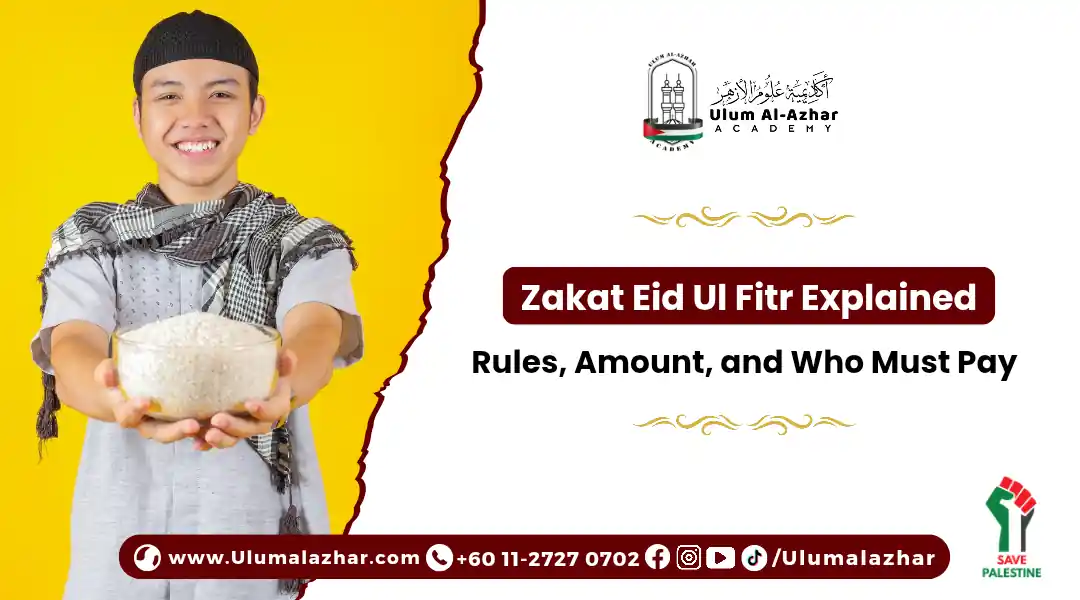
Zakat Eid Ul Fitr Explained: Rules, Amount, and Who Must Pay
Table of Contents
Scholars have described the day of Eid al-Fitr as the “Day of Reward.” They say: “It is called Eid because Allah renews for His servants various forms of honor, gifts, and rewards on that day, and because people renew their joy and happiness within it.”
In this meaning, Allah the Almighty says:
“Say, ‘In the bounty of Allah and in His mercy—let them rejoice in that. It is better than what they accumulate.’” (Yunus 58).
One of the beauties of Islam is that it seeks joy for all Muslims on the day of Eid al-Fitr, both the rich and the poor. For this reason, Allah has made zakat eid ul fitr obligatory, in order to achieve educational and social purposes, and to bring comfort and healing to the hearts and souls of those in need.
Understanding the rules, amount, and proper timing of zakat eid ul fitr is essential for every Muslim. This guide explains the meaning, obligations, and practical aspects of this important form of charity.
Begin your comprehensive Islamic learning journey; it all starts with free consultation and Al-Azhar-certified Sheikhs in Egypt.

What Is Zakat Eid Ul Fitr and Why It Is Obligatory for Muslims
Zakat eid ul fitr, often called Zakat al-Fitr or Sadaqat al-Fitr, is a mandatory charity that Muslims give at the end of Ramadan before the Eid prayer. It differs from the annual zakat on wealth because it is connected specifically to fasting and the completion of the holy month.
zakat eid ul fitr was prescribed for several important wisdoms and purposes. Among them is compensating for any shortcomings in fasting. The Prophet ﷺ explained this in the hadith of Ibn Abbas, where he said that it is
“Zakat al-Fitr is a purification for the fasting person from idle talk and improper speech, and a provision of food for the poor (needy)”
Another wisdom of Zakat al-Fitr is to enrich the poor and spare them from asking others on the day of Eid. In the same hadith, it is described as “food for the needy.” Helping the poor and meeting their needs is one of the great objectives emphasized by the principles and higher purposes of Islamic law. In addition, this charity strengthens social solidarity within the community, spreads compassion among its members, and encourages people to care for one another.
The Ruling of Zakat al-Fitr
Zakat al-Fitr is obligatory for every Muslim, whether male or female, young or old, sane or mentally incapable. This is based on the hadith of Ibn Umar (may Allah be pleased with them both), who reported:
“The Messenger of Allah ﷺ made Zakat al-Fitr from Ramadan obligatory: one sa‘ صاع of dates or one sa‘ of barley upon the slave and the free person, the male and the female, and the young and the old among the Muslims.”
Who Must Pay Zakat Eid Ul Fitr Before Eid Prayer
One important aspect of zakat eid ul fitr is knowing who must pay it. Two conditions are required for Zakat al-Fitr to become obligatory:
- Islam:
It is not accepted from a non-Muslim, as Allah the Almighty says:
“And what prevented their expenditures from being accepted from them was nothing except that they disbelieved in Allah and in His Messenger.” (At-Tawbah 54) - Ability to give it:
A person must possess surplus provision beyond what is needed for themselves and those they are responsible for on the day and night of Eid. This includes essential needs such as food, drink, housing, and clothing.
The father is also responsible for paying Zakat al-Fitr on behalf of his young children. The majority of scholars hold that the father should pay it for those whose financial support is obligatory upon him, such as his wife and children.
So, unlike the yearly zakat on wealth, zakat eid ul fitr is not limited to people with large savings or assets. Instead, it applies to nearly every Muslim who has the means to provide for themselves and their dependents.
The key principle is simple: anyone who has more than their essential needs on the day of Eid should give zakat eid ul fitr so that others may share in the joy of the celebration.

How Much Zakat Eid Ul Fitr Should Be Given in Today’s Currency
The amount of zakat eid ul fitr was originally defined in the time of the Prophet ﷺ as one sa‘ صاع of staple food. A sa‘ is a traditional unit of measurement equivalent to approximately 2.5 to 3 kilograms of food.
Common food items used historically included:
- Wheat
- Barley
- Dates
- Raisins
- Rice or other staple grains
Ibn Umar رضي الله عنه reported: “The Messenger of Allah ﷺ made Zakat al-Fitr from Ramadan obligatory as one sa‘ of dates or one sa‘ of barley.”
Barley was one of the common staple foods of the people at that time. As Abu Sa‘id al-Khudri رضي الله عنه said: “On the day of Eid al-Fitr, during the time of the Prophet ﷺ, we used to give one sa‘ of food as Zakat al-Fitr. Our food at that time was barley, raisins, dried yogurt (aqit), and dates.” reported by Al-Bukhari.

When Is the Correct Time to Pay Zakat Eid Ul Fitr
The best time to give zakat eid ul fitr is on the morning of Eid before the Eid prayer. Abu Sa‘id al-Khudri رضي الله عنه said, as reported in Al-Bukhari:
“During the time of the Messenger of Allah ﷺ, on the day of Eid al-Fitr, we used to give one sa‘ of food.”
It is also reported from Ibn Umar رضي الله عنهما that:
“The Prophet ﷺ commanded that Zakat al-Fitr be given before people go out to the prayer.”
The wisdom behind this timing is that the poor should be provided for on the day of Eid so that they do not need to ask others, and so they may share in the joy and happiness of the celebration along with those who are well-off.
However, it is permissible to give Zakat al-Fitr one or two days before Eid. Al-Bukhari narrated that Ibn Umar (may Allah be pleased with them both) used to give it—meaning Sadaqat al-Fitr—to those who collected it, and he would pay it one or two days before Eid.
It is not permissible to delay zakat eid ul fitr until after the Eid prayer without a valid excuse. If someone delays it without an excuse, it will not be accepted as Zakat al-Fitr. This is based on the statement of the Prophet ﷺ:
“Whoever gives it before the prayer, it is accepted as Zakat (al-Fitr), and whoever gives it after the prayer, it is merely a charity among the charities.”
How New Muslims in Canada and the West Can Give Zakat Eid Ul Fitr
For new Muslims living in Canada, the United States, or Europe, understanding how to give zakat eid ul fitr may feel confusing at first. However, the process is actually simple and accessible.
Most mosques and Islamic organizations collect zakat eid ul fitr during the last days of Ramadan. These institutions distribute the funds or food to local families in need or send assistance to vulnerable communities worldwide.
New Muslims can give zakat eid ul fitr in several ways:
1. Through Local Mosques
2. Through Trusted Islamic Charities
3. Directly to People in Need
Seerah of Prophet Muhammad: Get to know our role model: Prophet Muhammad by studying his life, character, attributes, and teaching style.
Conclusion
Zakat eid ul fitr represents a social safety valve that ensures the poor are provided for while also purifying the soul of the giver. Its rulings are characterized by flexibility that takes into account the interests of both those who are obligated to give and those in need.
Adhering to its proper time and prescribed amount ensures the completeness of its reward and fulfills the spirit of solidarity, compassion, and mutual care that Islam calls for.
Experience your Islamic learning journey, commencing with free consultation under the tutelage of Al-Azhar-certified Sheikhs from Egypt.
FAQs
Is zakat eid ul fitr mandatory for every Muslim?
Yes, zakat eid ul fitr is obligatory for every Muslim who possesses enough resources beyond their basic needs for the day and night of Eid.
What happens if someone forgets to pay zakat eid ul fitr before Eid prayer?
There is no sin upon the person because the Prophet ﷺ said: “Indeed, Allah has pardoned my nation for mistakes, forgetfulness, and what they are forced to do.” However, the obligation of zakat remains required, and the person must give it as soon as they remember.
Can one person pay zakat eid ul fitr for the whole family?
Yes, the head of the household may pay zakat eid ul fitr on behalf of their spouse, children, and dependents.
