

Everything You Need to Know About rakat for maghrib
As the sun dips below the horizon, the call to Maghrib prayer signals a sacred transition in the Muslim day. While its spiritual reward is immense, its execution requires careful attention, particularly to the number and sequence of its units.
Whether you are a new convert seeking precision or a lifelong Muslim aiming for deeper focus (Khushu’), here you will find a comprehensive, step-by-step guide to mastering the rakat for Maghrib helping you move beyond mere motion to achieving true inner devotion in your sunset worship.

How to Perform rakat for maghrib Correctly Step by Step
The rakat for maghrib consist of three obligatory units (fard). Below is a detailed step-by-step guide:
1. Making the Intention (Niyyah)
There is no need to say: “I intend to pray.”The intention is not spoken out loud; it is a conscious awareness within your heart. A person comes to the prayer with the intention of praying, and that is sufficient; and the same is for wudu’.
The Messenger ﷺ said: “Actions are judged by intentions, and every person will have only what he intended.”
2. First Rakah
- Raise your hands and say Allahu Akbar. This is the opening Takbir (Takbirat al-Ihram).
- Recite Surah Al-Fatiha, followed by any short surah or verses from the Qur’an.
- Perform ruku‘ while saying Allahu Akbar, ensuring your back is straight and say Subhana Rabbiy al-Azim three times.
- Rise from ruku‘ with Sami‘ Allahu liman hamidah and say Rabbana walaka al-hamd.
- Go into sujud (prostration) while saying Allahu Akbar.There are two sajdah In every rakah. In every (sajdah) say Subhana Rabbiy al-A’la three times. Between the two prostrations, we sit and say: “My Lord, forgive me and have mercy on me.”
3. Second Rakah
- Stand up (from the second sujud of the first rakah) with saying Allahu Akbar and repeat every thing like the first rakah.
- After the two sujud, sit for the first tashahhud and recite At-Tahiyyat until “Ashhadu an la ilaha illa Allah wa ashhadu anna Muhammadan rasul Allah.”
- Rise for the third rakah with saying Allahu Akbar.
4. Third Rakah
- Recite only Surah Al-Fatiha in the third rakah.
- Continue with ruku‘ and sujud as usual.
- After the final sujud, sit for the final tashahhud, reciting it fully along with salawat on the Prophet ﷺ.
- End the prayer with tasleem to the right and left.
Discover personalized Islamic learning: begin with a free consultation by Al-Azhar-certified Sheikhs from Egypt.

Understanding the Importance of Maghrib Prayer in Daily Life
Maghrib prayer is the witr of the day, as the Prophet ﷺ informed us about rakat for maghrib. It is the prayer with which the day is concluded and the night is welcomed. In this blessed hour:
1. The servant remembers his Lord Exalted be He—ending the day with obedience and beginning the night with obedience.
2. A Time of Spiritual Transition: Maghrib is the moment when the world shifts from light to darkness, symbolizing reflection, accountability, and gratitude for the day that has passed.
3. A Reminder of Divine Timing: Maghrib prayer has the shortest time window among all prayers. This teaches discipline, urgency, and awareness of time—qualities vital in both worship and personal life.
Seerah of Prophet Muhammad: Get to know our role model: Prophet Muhammad by studying his life, character, attributes, how he lives his daily Life, and teaching style.
Common Mistakes to Avoid While Praying rakat for maghrib
Some mistakes during the rakat for maghrib, can affect the quality—or sometimes the validity—of their prayer.
The most common mistake is delaying maghrib beyond its time. The Prophet ﷺ commanded that Maghrib prayer be performed immediately once its time begins. He said in the hadith:
“Pray Maghrib at the time of sunset; hasten it before the stars appear.” This means to pray as soon as the sun sets and before the stars become visible.
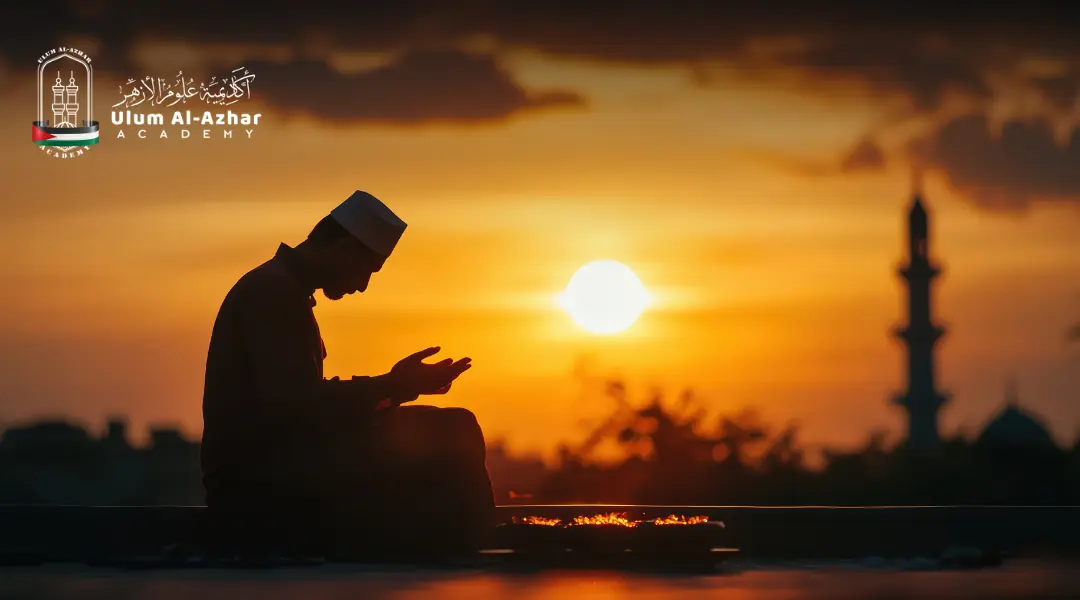
Spiritual Benefits of Performing Maghrib Prayer Regularly
Rakat for maghrib have special reward, Whoever prays Maghrib in the mosque and then remains there waiting for the ‘Isha prayer is considered to be in prayer, engaged in a righteous deed through which Allah, the Almighty, boasts to the angels.
Abdullah ibn ‘Amr reported: We prayed Maghrib with the Messenger of Allah ﷺ. Some people returned home, while others stayed behind. Then the Messenger of Allah ﷺ came out quickly, breathing heavily, with his knees uncovered, and said:
“Rejoice! Your Lord has opened a gate from the gates of heaven and is boasting to the angels about you, saying: Look at My servants—they have completed one obligatory prayer, and they are waiting for another.”
Tips from Ulum Al-Azhar Academy on Perfecting Your rakat for maghrib
Ulum Al-Azhar Academy A full course dedicated to Prayer and Purification – including rakat for maghrib-. If you’re looking to deepen your understanding of worship from its foundations, this course is the perfect place to begin.
This comprehensive program is taught by qualified scholars and blends both the theoretical and practical aspects of purification—such as wudu’, ghusl, and tayammum—as well as the essential rulings of prayer, including its conditions, pillars, special prayers, and even the fiqh of funerals.
Enroll today and begin your spiritual journey toward more mindful and transformative worship!

Conclusion
Understanding the rakat for maghrib, performing them correctly, and appreciating their deeper meaning brings both spiritual fulfillment and practical discipline to a Muslim’s life. By avoiding common mistakes, following the traditional steps, and striving for presence of heart, every Muslim can elevate their Maghrib prayer into a moment of peace and spiritual renewal.
Embark on your custom Islamic learning path through a free consultation session led by Egyptian Al-Azhar Sheikhs.
FAQs
1. How many rakat for maghrib are obligatory?
There are three obligatory rakat for maghrib, prayed after sunset.
2. Can I recite another surah in the third rakah?
No. as the Sunnah, only Surah Al-Fatiha is recited.
3. What should I do if I forget the first tashahhud?
If you forget it unintentionally, continue the prayer and perform sujud as-sahw before ending.
4. When does Maghrib prayer time end?
It ends when the twilight disappears. Since this time is short, it is best to pray promptly.
