
How Do You Read the Quran? A Step-by-Step Islamic Guide
Table of Contents
Allah Almighty revealed the Holy Quran to His servant and Prophet Muhammad (peace and blessings be upon him) and commanded that it be acted upon and recited. Allah تعالى says:
“So when We have recited it, then follow its recitation.” (Surah Al-Qiyamah: 18)
And He also says: “And recite the Quran with measured recitation.” (Surah Al-Muzzammil)
Reading the Quran is one of the most profound acts of worship in Islam. It is not merely about pronouncing Arabic words; it is a spiritual journey that connects the reader to divine guidance, moral refinement, and inner peace.
How do you read the Quran correctly and meaningfully? This guide provides a clear, structured, and authentic approach to Quran recitation, combining correct practice, understanding, and spiritual presence.
A free consultation with Al-Azhar-certified Sheikhs from Egypt is your gateway to personalized Islamic learning.
Step-by-Step Guide on how do you read the Quran Correctly
When asking how do you read the Quran, we must first understand what is meant by correct recitation of the Quran.
What is meant by proper recitation is to articulate the letters clearly and recite them with deliberation, as this is more conducive to understanding their meanings. It also means giving each letter its due in terms of its characteristics and points of articulation, as well as observing the rules that arise from its interaction with other letters, such as ikhfa اخفاء (concealment), idhar (clarity) اظهار, and other related rules.
Online Quranic Arabic Course is designed to help you understand the Arabic vocabulary in Quran, its pronunciation besides grammar. It is a guide for beginners to facilitate their Quranic journey and make it deeper.
The following steps can help you get correct recitation of the Quran.:
1. Make a Pure Intention (Niyyah)
This is based on the statement of the Prophet ﷺ in the authentic hadith:
“The one who is proficient in the recitation of the Quran will be with the noble and righteous scribes, and the one who recites the Quran with difficulty, stammering while reciting it, will have two rewards.”
He informed us that such a person receives two rewards, even if he stumbles and does not recite as well as he should. He is granted two rewards because he is striving—struggling against himself in reciting the Book of Allah—reflecting, understanding, and learning, until he performs to the best of his ability in recitation.
2. Listen to the Quran Frequently
It was narrated by Abdullah ibn Mas‘ud (may Allah be pleased with him) that the Prophet ﷺ said to him:
“Recite the Quran to me.” I said, “Shall I recite it to you while it was revealed to you?”
He replied, “I love to hear it recited by someone other than myself.” So I recited Surah An-Nisa to him until I reached the verse:“So how will it be when We bring from every nation a witness and bring you, [O Muhammad], as a witness against these people?” (An-Nisa: 41–42)
Then the Prophet ﷺ said, “That is enough for now.” I turned toward him and saw that his eyes were shedding tears.
A person who recites the Quran is often occupied with focusing on the letters, memorization, or the rules of Tajweed. Therefore, listening to the Quran—especially from skilled, precise, and proficient reciters—has a powerful impact. When the ear becomes accustomed to correct recitation, the tongue will pronounce it with ease.
Online Quran Memorization Course is designed to provide structured and effective methods to help you achieve your goals whether you’re a beginner or want to complete your Quran memorization.
3. Read Slowly and Clearly (Tarteel)
Recite it calmly, pausing at the ends of the verses. Before delving into the rules of Tajweed, focus on the correct pronunciation of the words and proper vowelization. There is no harm in reciting the Quran even if you do not yet know Tajweed. Learning Tajweed is recommended for those who are able and have the opportunity to do so, and we should strive toward it, based on the saying of the Prophet ﷺ in the authentic hadith:
“The best of you are those who learn the Quran and teach it.”
4. Maintain Consistency, Not Quantity
Even a few verses read daily with focus are better than many pages read without presence. Regularity builds a lifelong relationship with the Quran.
So if you are asking how do you read the Quran properly, the answer is always: slowly, calmly, and at the beginning, it is sufficient to recite the words correctly in a way that does not change their meanings.
Master the foundations and principles of Arabic pronunciation in Quran with qualified native Arabic tutors from Al-Azhar Al-Sharif in Noorani Qaida Classes.
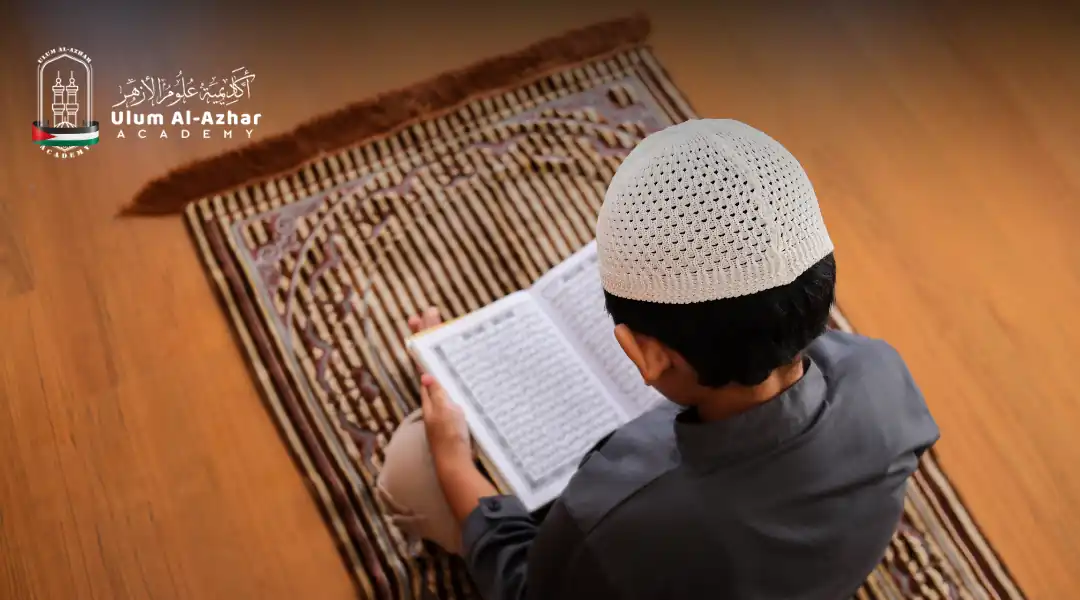
Learning Tajweed and Proper Pronunciation
One of the most essential aspects of answering how do you read the Quran is learning Tajweed. The science of Tajweed is the discipline that explains the rules and guidelines which must be observed when reciting the Holy Quran, in accordance with how Muslims received it from the Messenger of Allah ﷺ. This is done by giving each letter its proper point of articulation, characteristics, and vowelization, without exaggeration or undue difficulty.
Why Tajweed Matters (The Benefit of the Science of Tajweed)
It protects the tongue from mistakes and incorrect pronunciation when reciting the Words of Allah, Glorified and Exalted.
The steps for learning the Tajweed of the Holy Quran go through five stages:
First Stage: Listening
- Listening to a proficient teacher: Choose a teacher who has strong mastery of Tajweed and whose recitation you find appealing.
- Focused listening: Pay close attention to the points of articulation of the letters, their characteristics, and the rules of Tajweed.
- Repeating the verses: Repeat the verses after the teacher to ensure you understand and apply the Tajweed rules correctly.
Second Stage: Following Along
- Follow the teacher while he is reciting the verses by reading from the Mushaf.
- Repeat the verses along with the teacher, focusing on the correct articulation points, letter characteristics, and Tajweed rules.
Third Stage: Imitation (Foreshadowing)
Recite along with the teacher during his recitation of the verses, concentrating on perfecting the articulation points, letter characteristics, and Tajweed rules.
Fourth Stage: Recording
- Record your own recitation of the verses after the teacher.
- Evaluation: Listen to your recording and compare your recitation with that of the teacher.
- Identify the mistakes you made during recitation.
Fifth Stage: Reviewing with a Teacher
- Present your recitation to a qualified teacher for evaluation and correction of mistakes.
- Focus on the rules and aspects of Tajweed that need improvement.
Understanding the Meaning While Reading the Quran
How do you read the Quran? Does reading the Quran mean merely pronouncing its words?
Indeed, reflecting upon the Quran (tadabbur) means contemplating it in order to :
- understand its meanings,
- grasp the purposes and objectives of its verses,
- realize the meanings, wisdoms, and rulings they convey
- seek benefit from the knowledge and faith contained within them and guidance through them.
So how can one reflect upon the Holy Quran? There are practical steps and effective means that help in achieving proper reflection upon the Quran.
Practical Ways to Understand and reflect the Quran:
- Recognizing the greatness of the Quran and the benefits of its recitation. If you truly love the Quran, you will strive earnestly to understand it.
- Remain constantly connected to the Quran through both recitation and listening.
- Understand the meaning through books of Tafsir, for reflection (tadabbur) cannot be achieved without understanding the meaning.
- Interact with the verses by asking questions, seeking refuge in Allah, seeking forgiveness, and similar acts whenever appropriate, as this helps bring presence of heart during recitation.
Jabir ibn ‘Abdullah رضي الله عنه said:
“The Messenger of Allah ﷺ recited Surah Ar-Rahman to us until he completed it, then he said: ‘Why do I see you silent? The jinn responded better than you did. Every time I recited the verse: {So which of the favors of your Lord will you deny?} they said: None of Your favors, our Lord, do we deny; to You belongs all praise.’”
- Refer to what has been mentioned in the Tafsir of the verse, returning to the understanding of the righteous predecessors, their reflection upon the verse, and how they interacted with it.
- Understand the Arabic language in which the Quran was revealed, including the meanings of words, their implications, and the subtle nuances they convey.
- Relate the verses of the Quran to one’s lived reality, making the verses a starting point for reforming one’s life and circumstances, and a standard by which to evaluate oneself and one’s surroundings.
- Reflect upon the context of the verse and the arrangement of the verses, for there are many wisdoms and secrets in this order; this is why scholars paid great attention to the science of coherence and connections between verses.
- Let the believer measure himself against the Book of Allah, examining the qualities of the believers to see whether he embodies them, and the traits of the hypocrites and disbelievers to ensure he is far removed from them—or to recognize if he possesses any of those traits and correct himself accordingly.
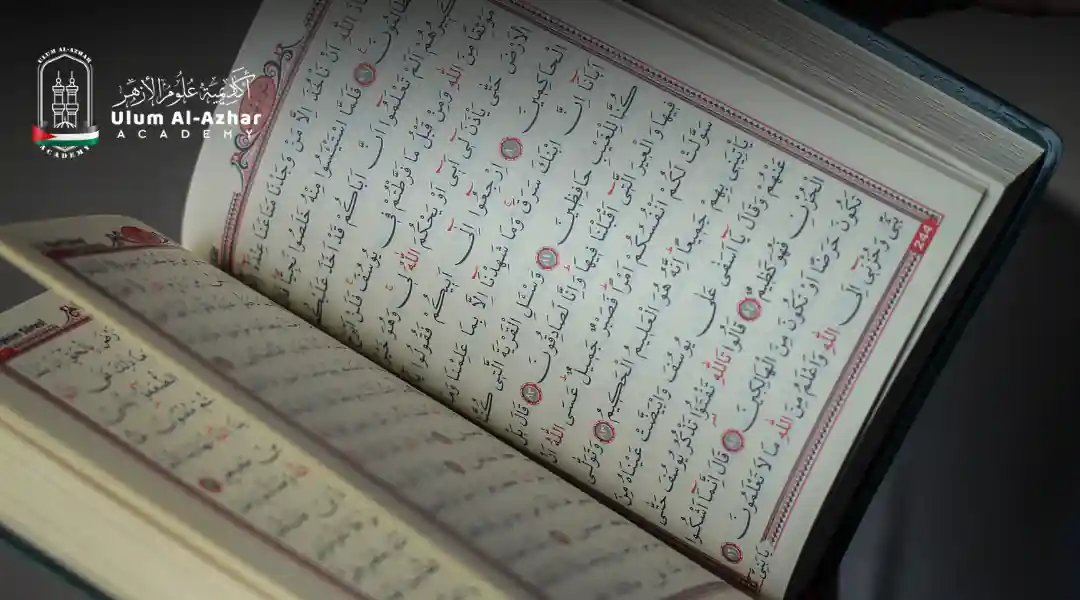
The Spiritual Benefits of Regular Quran Recitation
Understanding how do you read the Quran is incomplete without recognizing its spiritual impact. The Quran benefits are limitless, few of them are:
- Recognizing Allah’s care for the Holy Quran and His preservation of it:
“Indeed, it is We who sent down the Reminder, and indeed, We will be its Guardian.” (Surah Al-Hijr: 9)
This is because it is the final Word of Allah to the people of the earth, the authority over the previous scriptures, and a book that contains the foundations of goodness and guidance.
- Completing the recitation of the Quran is a Sunnah. For this reason, the Prophet ﷺ guided ‘Abdullah ibn ‘Amr ibn Al-‘As عليه السلام to complete the Quran once every month.
- The Quran allows you to live alongside Prophet Yusuf عليه السلام: with him in the well, then in the palace, then in prison, then upon the platform of leadership, and finally in the blessed conclusion when he said:
“Cause me to die as a Muslim and join me with the righteous.” (Surah Yusuf: 101)
And through the Quran, you live with Ibrahim عليه السلام in his childhood, his reflection upon the dominion of the heavens, his search for Allah, his faith, his patience, his sacrifice, and his striving in the cause of Allah.
- Reciting the Quran will intercede for its companion on the Day of Resurrection. Abu Umamah Al-Bahili رضي الله عنه narrated that the Messenger of Allah ﷺ said:
“Recite the Quran, for it will come on the Day of Resurrection as an intercessor for its companions. Recite the two radiant ones: Al-Baqarah and Surah Aal ‘Imran, for they will come on the Day of Resurrection as if they were two clouds, or two shades, or two flocks of birds in ranks, pleading on behalf of those who recite them. Recite Surah Al-Baqarah, for taking it is a blessing and abandoning it is a cause of regret, and the sorcerers cannot withstand it.” (Narrated by Muslim)
The term “the sorcerers” refers to magicians, as explained by the scholars of Hadith.
Ulum Al-Azhar Academy’s Quran Learning Programs
For those seeking structured and authentic learning, Ulum Al-Azhar Academy offers comprehensive Quran programs designed for students of all levels.
What Makes These Programs Distinct
- Qualified instructors from Al-Azhar Al-Sharif- Egypt.
- Step-by-step Tajweed instruction
- Personalized correction and feedback
- Programs suitable for children, adults, and non-Arabic speakers
Save time & effort by Ulum Al-Azhar Classes | Tajweed & Talaqqi Mastery Track with Ijazah Sanad where you study Tajweed and Quran, which are aligned with each other by qualified lecturers from Al-Azhar Al-Sharif.
Conclusion
So, how do you read the Quran in a way that truly benefits your heart and soul? You begin with sincerity, learn correct recitation, seek understanding, and remain consistent. The Quran is not meant to be rushed or treated as a routine task; it is meant to shape lives.
Whether you are just starting or seeking improvement, remember that every step toward the Quran is honored by Allah. Read with humility, learn with patience, and let the Quran guide you daily.
Ready for personalized Islamic learning? Start with a free consultation from our Al-Azhar-certified Sheikhs in Egypt.
FAQs
1. How do you read the Quran if you are a beginner?
Start with learning the Arabic letters, basic pronunciation, and short surahs. Consistency matters more than speed.
2. Is Tajweed mandatory when reading the Quran?
Learning Tajweed is essential to avoid major pronunciation errors. Basic Tajweed is obligatory, while advanced rules enhance recitation.
3. How do you read the Quran with understanding?
Use a trusted tafsir, study brief explanations, and reflect on verses during and after recitation.
4. Can non-Arabic speakers learn how do you read the Quran properly?
Yes. With proper guidance and structured learning, non-Arabic speakers can achieve accurate and beautiful recitation.
