
Guide to Saying the Before Meal Dua in Daily Life
Table of Contents
Before lifting a spoon, Islam teaches believers to pause and reflect. This deliberate moment of remembrance is encapsulated in the before meal dua—a short but profound supplication which is a key to unlocking the barakah (blessings). By declaring this dua, we acknowledge that every grain and drop is a direct gift from the Creator.
These lines are your comprehensive guide to understanding and correctly reciting the before meal dua, exploring the deep spiritual benefits it imparts and how this simple Sunnah can enrich family life and instill genuine gratitude.
Kickstart your Islamic education: your journey awaits with free consultation and Al-Azhar-certified Sheikhs in Egypt.
How to Properly Say a Before Meal Dua in Islam
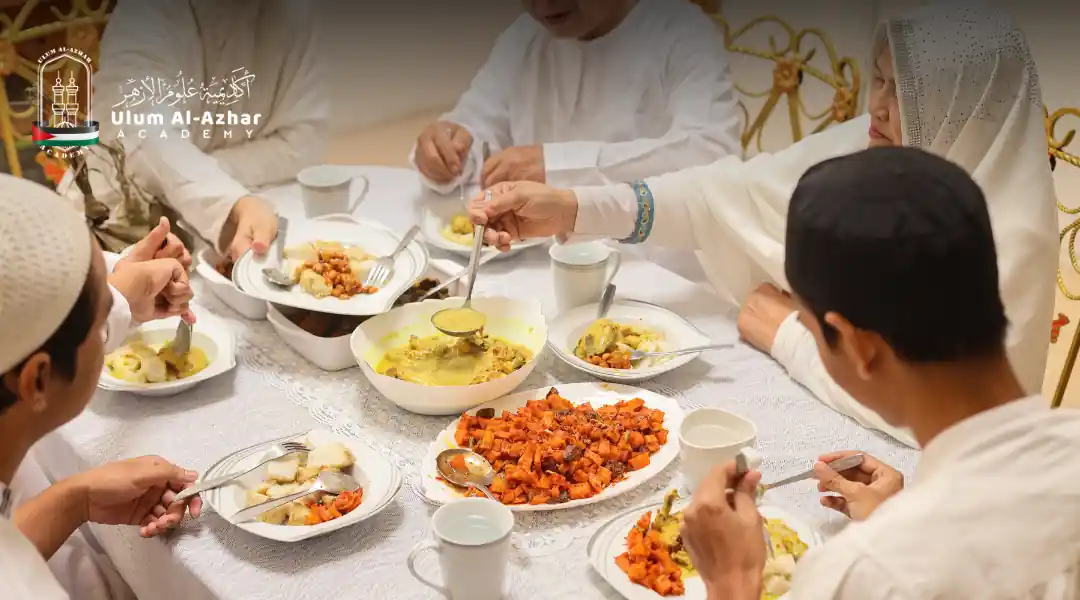
The Sunnah for a believer is to mention the name of Allah at the beginning of the meal and to praise Allah at the end of the meal. The Prophet ﷺ said to ʿUmar ibn Abī Salamah:
‘Say the name of Allah, eat with your right hand, and eat from what is in front of you.’”
The most well-known supplication narrated in the authentic traditions is:
“Bismillah.” بسم الله
(“In the name of Allah.”)
If a Muslim forgets to say it at the beginning, the Prophet ﷺ taught us to say during the meal:
“Bismillahi awwalahu wa akhirahu.” بسم الله أوله وآخره
(“In the name of Allah, in its beginning and end.”)
It was narrated from ʿAbdullāh ibn ʿAmr ibn al-ʿĀṣ رضي الله عنهما that the Prophet ﷺ, when food was brought near to him, would say: “O Allah, bless for us what You have provided for us and protect us from the punishment of the Fire. In the name of Allah.” However, this narration is weak.
What is sufficient is to say at the beginning of the meal: “Bismillāh al-Raḥmān al-Raḥīm”, and at the end of the meal: “Al-ḥamdu lillāhi Rabb al-ʿālamīn.” As it was reported from the Prophet ﷺ:
“When any one of you eats, let him mention the name of Allah at the beginning. If he forgets to mention the name of Allah at the beginning, then let him say: ‘Bismillāh fī awwalihi wa ākhirihi’ (In the name of Allah, at its beginning and at its end).”
Learning the Arabic language helps you recite the supplications more easily and allows you to feel the profound meanings of the words. Master Fusha Arabic: Learn It with Native Arabs in 24 Hours.
The Spiritual and Health Benefits of Reciting Before Meal Dua
Saying the before meal dua carries a number of spiritual, emotional, and even physical benefits as following:
1. Strengthening gratitude: When a Muslim begins with the remembrance of Allah, the food becomes a means of worship rather than just consumption.
2. Protection from Shaytan: In Ṣaḥīḥ Muslim, from the narration of Ḥudhayfah, the Prophet ﷺ said: “Indeed, Shayṭān deems food lawful for himself when the name of Allah is not mentioned over it.”
3. Improved discipline and mindfulness: The moment of reciting the dua trains Muslims to gain healthier eating habits and reduces overeating.
4. Encouraging halal mindfulness: Beginning food with the remembrance of Allah reinforces the importance of consuming only halal, ethically earned food.
5. Enhancing family spirituality: When families recite the before meal dua together, it deepens their spiritual bond and reinforces Islamic manners in the home.

Teaching Kids to Remember Their Before Meal Dua Daily
Children pick up knowledge through gentle encouragement, modeling, and repetition. From an early age, teaching kids the before meal dua creates lifelong habits.
- Make it an enjoyable ritual: Make the dua a happy occasion. At the family meal, encourage your youngster to lead the dua.
- Use straightforward charts or stickers: Reward charts might encourage younger kids to remember their dua.
- Describe the meaning: Children have a stronger bond with the practice when they comprehend the purpose of the dua. Tell stories like the story of Surah Quraish.
- Set a good example: Kids copy what they observe. When parents recite the dua on a regular basis, the youngster develops the habit organically.
At Ulum Al-Azhar Academy we are dedicated to providing enriching educational experiences for kids aged 5 to 15 years old. Little Azhary course includes Siraah, Fiqh, Aqidah Manners & Morals Led by qualified teachers from Al-Azhar Al-Sharif
Different Types of Before Meal Dua from the Sunnah
From ʿAbdullāh ibn ʿAbbās رضي الله عنه, from the Prophet ﷺ:
“Whoever is given food by Allah, let him say: ‘O Allah, bless it for us and provide us with something better than it.’ And whoever is given milk by Allah, let him say: ‘O Allah, bless it for us and increase us in it.’”
So, at drinking milk, the Prophet ﷺ used to say:
O Allah, bless it for us and give us more of it.
“Allahumma barik lana fihi wa zidna minhu”
اللَّهُمَّ بَارِكْ لَنَا فِيهِ وَزِدْنَا مِنْهُ

Incorporating Before Meal Dua Into Family Meals – Ulum Al-Azhar Tips
Here are practical, spiritually grounded tips inspired by Islamic teaching methods often emphasized in classical institutions:
1. Before eating, create a peaceful atmosphere: ask everyone to take a seat, settle in, and take a quick break.
2. Connect the dua with other sunnahs
- Eat with the right hand
- Begin with what is closest
- Avoid wasting food
- Maintain moderation
3. Use family meals as teaching moments: Parents can share short stories from the Seerah or sayings of the Prophet ﷺ that reinforce the importance of remembrance during meals.
Dive into Islamic learning; with the course of Know Your Prophet (Attributes & Seerah of Prophet Muhammad PBUH) , guided by Al-Azhar-certified Sheikhs based in Egypt.
Conclusion
Despite being a straightforward Sunnah, the before meal dua has a significant spiritual consequence. Eating becomes an act of worship, thankfulness, and attention instead of just a bodily routine. Muslims improve their daily routines and get closer to Allah by studying the benefits of the before-meal dua, teaching it to children, and incorporating it into family life.
Your path to Islamic knowledge starts now, with free consultation taught by Al-Azhar-certified Sheikhs from Egypt.
FAQs
1. What is the simplest before meal dua?
The simplest and most commonly practiced is: “Bismillah.”
2. What should I say if I forget the dua at the beginning?
You should say: “Bismillahi awwalahu wa akhirahu.”
3. Can children recite the before meal dua?
Yes, and they should be taught from a young age to make it a daily habit.
4. Is the before meal dua obligatory?
It is a highly recommended Sunnah, not obligatory, but carries great spiritual reward.
