

Complete Guide to Duas for Qunoot: Meaning, Benefits, and How to Recite
Table of Contents
In the journey of prayer and devotion, every Muslim looks for a moment to deeply connect with Allah — a time when the heart communicates directly with its Creator. In the beauty of Islamic prayer, duas for qunoot hold a special and elevated place because they are powerful and spiritually enriching. These special duas are said during the Witr “وتر” prayer and in times of difficulty, showing full surrender, thanks, and reliance on Allah.

Understanding the Meaning and Importance of Duas for Qunoot in Islam
Qunoot has several meanings: among them are continuous obedience, humility, and silence. However, the Qunoot mentioned in the Witr prayer refers to specific supplications that the Prophet ﷺ taught to Al-Hasan ibn ‘Ali. After rising from bowing (rukoo‘) in the final rak‘ah of Witr, one should say the prescribed remembrance: “Rabbana wa laka al-hamd” (“Our Lord, to You belongs all praise”), and then recite the duas of qunoot.
Duas for qunoot also are recited during calamities (known as Qunoot al-Nazilah). In times of hardship, a Muslim prays two rak‘ahs and then recites the du‘a of Qunoot in the final rak‘ah. This practice is rooted in the Sunnah of the Prophet Muhammad ﷺ, who taught his companions the importance of turning to Allah in moments of need, gratitude, and submission.
As the Prophet ﷺ performed Qunoot in Madinah, supplicating against the disbelievers of Quraysh when they expelled and harmed him, and praying for the weak Muslims in Makkah — that Allah would deliver them from the harm of their enemies and grant them safety. When some Bedouins attacked a group of his companions, the Prophet ﷺ made Qunoot and prayed against them for an entire month.
The importance of duas for qunoot lies in their ability to strengthen one’s bond with Allah. Through them, we express gratitude, ask for forgiveness, and seek relief from hardship. It is said that in the moments of Qunoot, a believer’s heart reaches its highest state of humility and awareness before the Creator.
Offering a free consultation with Al-Azhar-certified Sheikhs from Egypt to help you begin personalized Islamic learning.
Step-by-Step Guide on How to Recite Duas for Qunoot Correctly
Al-Hasan ibn ‘Ali said: The Messenger of Allah ﷺ taught me words to say in the Qunoot of Witr:
“O Allah, guide me among those You have guided, grant me well-being among those You have granted well-being, take me into Your care among those You have taken into Your care, bless me in what You have given, and protect me from the evil of what You have decreed. Indeed, You decree, and none can decree over You. None is humiliated whom You have befriended, and none is honored whom You have opposed. Blessed are You, our Lord, and Exalted.”
This marks the end of Al-Hasan’s narration. Another narration adds that the Prophet ﷺ would also say in his Witr:
“O Allah, I seek refuge in Your pleasure from Your anger, and in Your pardon from Your punishment. I seek refuge in You from You. I cannot praise You enough; You are as You have praised Yourself.”
If one adds a few other short supplications after that, there is no harm in doing so.
know our role model: Prophet Muhammad by studying his life, character, attributes, and teaching style through the Seerah of Prophet Muhammad Course.

Here’s a step-by-step guide to help you recite duas for qunoot correctly during Witr prayer:
1. The Witr prayer consists of one rak‘ah performed after the Shaf‘ prayer. The Shaf‘ prayer refers to any even number of rak‘ahs — two, four, and so on — prayed two by two.
2. After completing the last two rak‘ahs of Shaf‘, the Muslim prays the single rak‘ah of Witr. In the two Shaf‘ rak‘ahs, one recites Surah Al-Fatihah and Surah Al-A‘la in the first rak‘ah, and Surah Al-Fatihah and Surah Al-Kafirun in the second, then concludes with salam. This is what is known as Shaf‘.
3. The Witr is then prayed as one rak‘ah, in which Surah Al-Fatihah and Surah Al-Ikhlas are recited, followed by bowing (rukoo‘). After rising from rukoo‘, the worshipper says “Sami‘a Allahu liman hamidah” (“Allah hears those who praise Him”), and then recites the duas for Qunoot.
اللهم اهدنا فيمن هديت، وعافنا فيمن عافيت، وتولنا فيمن توليت، وبارك لنا فيما أعطيت، وقنا شر ما قضيت، فإنك تقضي ولا يقضى عليك، وإنه لا يذل من واليت، ولا يعز من عاديت، تباركت ربنا وتعاليت اللهم إني أعوذ برضاك من سخطك .. اللهم إني أعوذ برضاك من سخطك وبعفوك من عقوبتك، وأعوذ بك منك لا أحصي ثناءً عليك أنت كما أثنيت على نفسك.
Transliteration:
Allahumma ihdini feeman hadayt, wa ‘afini feeman ‘afayt, wa tawallani feeman tawallayt, wa barik li feema a‘tayt, wa qini sharra ma qadayt, fa innaka taqdi wa la yuqda ‘alayk, innahu la yadhillu man walayt, tabarakta Rabbana wa ta‘alayt.
4. The prayer is completed as usual — with two prostrations (sujood), then the final tashahhud, and ending with tasleem.
Common Mistakes People Make While Saying Duas for Qunoot
Although duas for qunoot are a source of immense reward, many people unintentionally make errors that affect the quality or meaning of their supplications as:
1. Raising one’s voice excessively during supplication — sometimes to the point of shouting or crying out — is a common mistake. Yet Allah Almighty says:
“Call upon your Lord with humility and in private; surely, He does not love the transgressors.”
(Surah Al-A‘raf, 7:55)
Here, Allah describes raising the voice excessively in du‘a as a form of transgression. He also says:
“Do not recite your prayer too loudly, nor too quietly, but seek a way between the two.”
(Surah Al-Isra, 17:110)
2. Excessive length in du‘a: Some worshippers make their du‘a of Qunoot longer than the prayer itself, which contradicts the guidance of the Prophet ﷺ, who used concise and comprehensive words in his supplications (jawāmi‘ al-kalim). Moderation and clarity are more in line with the Sunnah than unnecessary prolongation.
3. Exaggeration and forced rhyming in du‘a: Another mistake is overcomplicating the wording of duas for qunoot with forced rhymes and phrases not derived from the Sunnah. For example, someone might say:
“O Allah, accept our bowing, our prostration, and our standing,”
when it would be sufficient to say:
“O Allah, accept our prayer.”
Likewise, some say:
“O Allah, I do not ask You to change Your decree, but I ask You to make it gentle for me.”
This contradicts the hadith reported as hasan (sound):
“Nothing repels the Divine Decree except du‘a.”
If du‘a can change destiny by Allah’s mercy, how can we refrain from asking Him to avert hardship?
4. Persistently repeating the same supplication every time
Some imams consistently use the same duas for qunoot every night, such as beginning with
“O Allah, guide us among those You have guided…” and always follow it with “O Allah, grant us a portion of fear of You…”
The mistake here is that many worshippers begin to assume this fixed routine is a required Sunnah.

The Spiritual Power of Duas for Qunoot During Witr Prayer
The Witr prayer, performed after Isha, within it, the duas for qunoot serve as the heart of supplication, the point where the believer’s spirit opens fully to Allah’s mercy. When it is recited with reflection, it helps strengthen faith and bring tranquility to the heart.
Here are some of the spiritual benefits of reciting duas for qunoot:
- A direct conversation with Allah
In Qunoot, the believer speaks directly to Allah, expressing gratitude, asking for guidance, and seeking relief. - Forgiveness and purification
Repeatedly making duas for qunoot purifies the soul, as it is a form of repentance and surrender. It helps cleanse the heart of arrogance and brings humility before the Creator.
Discover What is the Shahada in Islam and Why It’s the Core of Faith.
- Protection from harm
The phrase “protect me from the evil of what You have decreed” reminds us that Allah alone controls outcomes and that His decree is always just and merciful. - Connection to the Ummah
When prayed collectively, especially during Ramadan, duas for qunoot strengthen the bond between worshippers and unite them in shared supplication.
Authentic Duas for Qunoot You Can Learn from Ulum Al-Azhar Academy
For those eager to master duas for qunoot, authenticity and proper pronunciation are essential. Ulum Al-Azhar Academy provides a balanced and scholarly approach to learning Islamic supplications, combining authentic texts with correct tajweed and spiritual reflection.
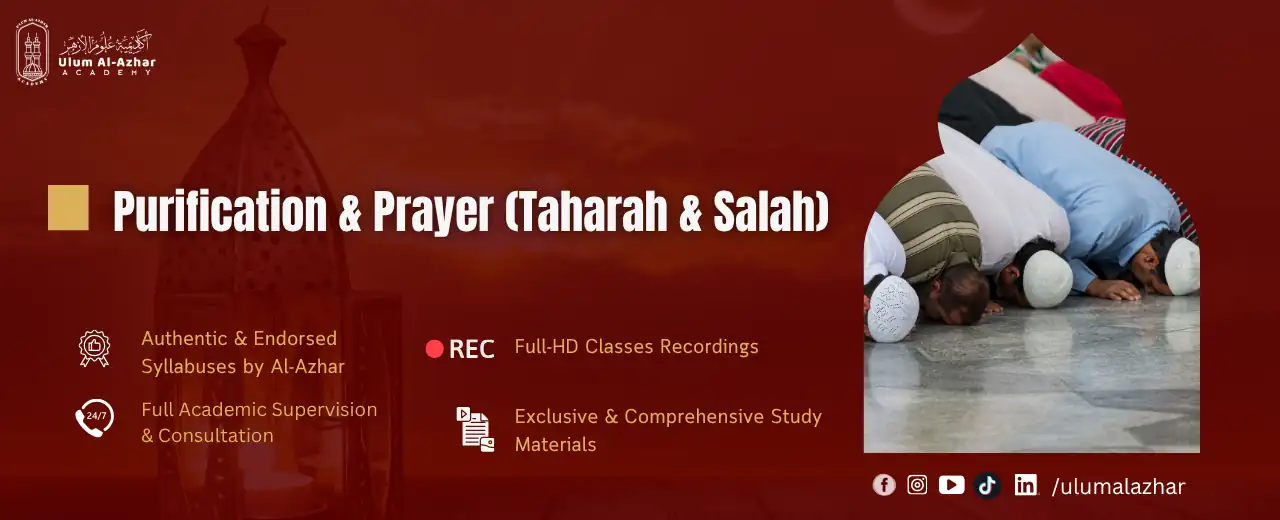
At Ulum Al-Azhar Purification & Prayer (Taharah & Salah) course, learners are guided step by step on how to perfect their Wudu, prayer, and duas with understanding and ensuring both correctness and depth of meaning.
Conclusion
Whether you are just beginning to learn or seeking to refine your recitation, understanding the meaning, structure, and essence of duas for qunoot will transform your prayers into deeper spiritual encounters. Through sincerity, proper pronunciation, and reflection, these supplications become a key to inner peace, forgiveness, and closeness to Allah.
By practicing duas for qunoot regularly and learning from authentic sources, every Muslim can experience the spiritual strength that comes from true devotion.
Connect with Al-Azhar-certified Sheikhs from Egypt for a free consultation to start your personalized Islamic studies.
FAQs
What does “Qunoot” mean in Islam?
Qunoot means humility, devotion, and obedience. Duas for qunoot are special supplications recited during Witr and in times of hardship.
When should I recite duas for qunoot?
They are usually recited in the last rak‘ah of the Witr prayer, after reciting a surah and before going into rukoo‘ or after standing from rukoo‘.
Can I recite duas for qunoot in my own language?
No, the prayer is not valid unless it is performed as the Prophet ﷺ used to perform it, and the Prophet ﷺ performed it in the Arabic language. However, you may read the du‘a from a paper or a book.
